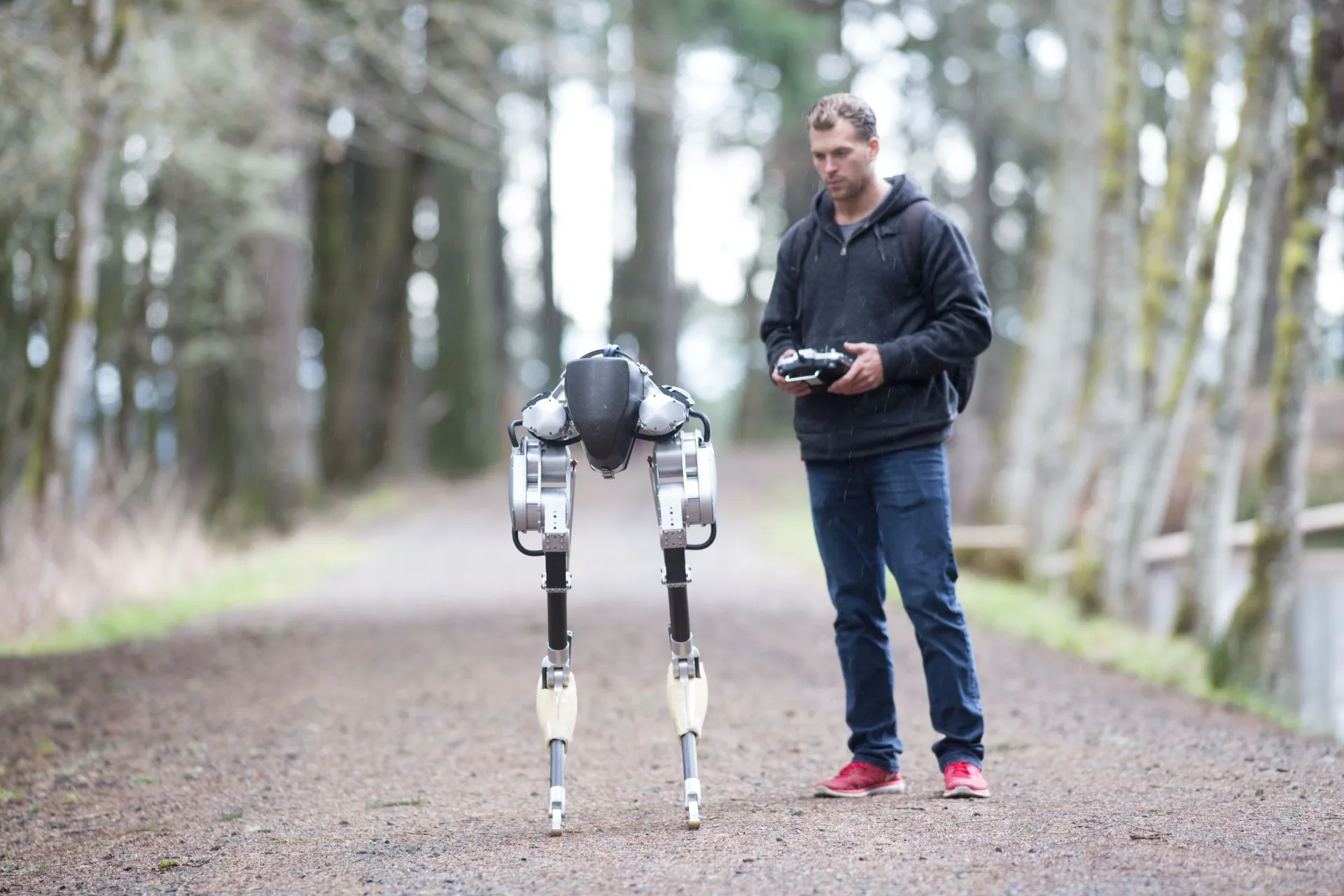
Agility’s Digit 5 Bet: Humanoids Without the Safety Cage
Digit 5 targets barrier-free work near people, 50 lb lifts, and a 10:1 charge ratio. Early access is 2027 — and the $300M order book is milestone-gated.
Industrial humanoids have a boring bottleneck that demos never show: the fence. If a robot needs a cage, interlocks, and a sealed workcell to stay legal next to people, it stops being a flexible coworker and becomes another fixed station.
On Sept. 15, 2026, Agility Robotics unveiled Digit 5 — a redesign aimed at that constraint after years of Digit 4 on real warehouse floors.
So basically: Digit 5 is Agility’s bid to move humanoids out of fenced workcells — heavier lifts, faster charging, safety responses meant for people nearby — with early access still targeted for 2027, not next week.
What Agility actually announced
Agility says Digit 5 is its first humanoid engineered for cooperatively safe work at scale: detect people, signal intent with lights and sound, and use an independent safety controller to avoid, stop, or sit when someone gets too close. The company is also a launch partner for NVIDIA’s Halos for Robotics stack on IGX Thor, and it points to work on emerging U.S. and ISO humanoid safety standards.
Hardware claims, from Agility’s release:
- Repeated lifts up to 50 lb (22.7 kg) — about 40% more payload than prior Digit, via a new leg design and cycloidal actuators
- About 90 minutes of runtime and a 9-minute charge, framed as a 10:1 run-to-charge ratio versus Digit 4’s 2:1, enough for more than 20 hours of productive time in a 24-hour day
- Reach up to 7.2 feet (2.2 m), up from Digit 4’s 5.5 feet, in a 5’11” / 284 lb human-scale package
- Swappable end-effectors on ISO-standard flanges for tote work through machine tending
Those specs are company figures for pre-production hardware. Treat them as design targets until customers publish operating data.
Why this is different from another humanoid unveil
Agility is not starting from a lab video. It says Digit 4 has logged more than 65,000 hours across sites including GXO, Schaeffler, Amazon, and Toyota Motor Manufacturing Canada, and that Digit moved 100,000 totes at GXO’s Flowery Branch facility at roughly 98% on-task accuracy. GXO previously confirmed a multi-year robots-as-a-service deal and live warehouse use of Digit — rare customer-side confirmation in this sector.
Digit 5’s point is to cover fuller facility workflows: depalletizing inbound, kitting and sequencing, machine tending, inspection, outbound palletizing — coordinated through Agility’s Arc fleet software with existing AMRs and warehouse systems.
The $300 million caveat
Agility says that as of May 2026 it held more than $300 million in multi-year Digit 5 orders, subject to contractual milestones, plus a broader sales pipeline. Independent analysis of Agility’s SEC investor materials describes that disclosed figure as tied to a 1,000-robot, three-year RaaS commitment with warrants that vest as robots deploy — a serious signal, not recognized revenue and not proof that Digit 5 fleets are already running.
RoboFab in Salem is designed for up to 10,000 Digits a year at full capacity. That is a building’s rated ceiling, not today’s Digit 5 output.
What to watch in 2027
Agility expects early access in the first half of 2027, general availability by year-end 2027, and first commercial push outside North America into the EU and UK with CE marking. The real tests are narrower:
- Barrier-free operation that holds under production pressure
- Charge and lift claims that survive multi-shift work
- Conversion of the milestone-gated order into accepted, retained robots
The grounded take
Digit 5 is not “humanoids solved.” It is a manufacturer that already put bipeds to work redesigning around the limits those deployments exposed. If cooperative safety and duty cycle hold up, warehouses stop needing a cage for every robot aisle. Until customers show hours, interventions, and throughput on Digit 5 itself, keep the scorecard on operating proof — not the press kit.
So basically — pass it on.