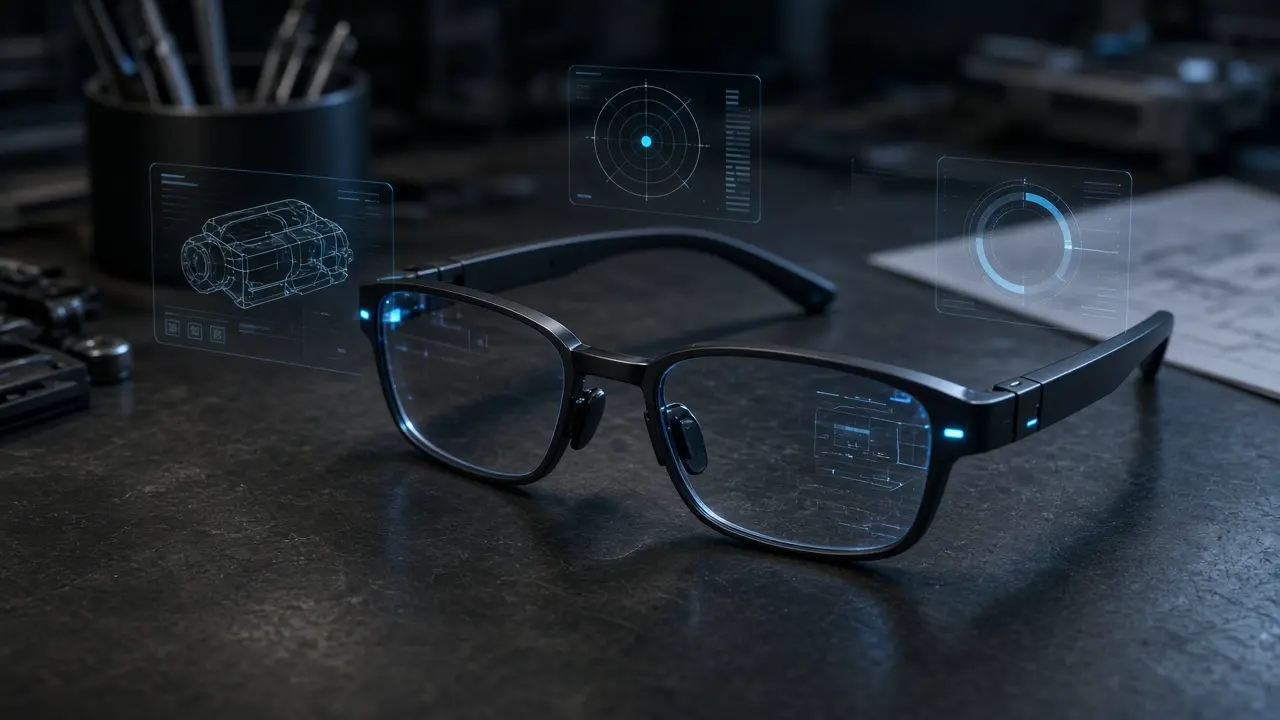
AR Glasses Won't Save Us. Tiny Useful Overlays Might.
Full-time face computers keep missing. Task-shaped AR keeps landing. Follow the boring wedge that actually ships.
The industry keeps promising a face computer you’ll wear all day. Consumers keep buying phones. There’s a lesson in that mismatch.
So basically: AR wins when it solves a specific task better than a phone — not when it tries to replace your entire visual field for lifestyle cosplay.
Presence is expensive
True always-on, outdoor, social-acceptable AR needs:
- Optics that don’t look like ski goggles
- All-day battery without a brick in your pocket
- Displays bright enough for sunlight
- Input that isn’t a public embarrassment
- A privacy story people actually believe
That’s a stacked systems problem. Shipping one breakthrough (better waveguides, better silicon) doesn’t clear the stack.
Where AR already earns its keep
Look at enterprise and task-shaped use:
- Warehouse pick overlays
- Field service instructions hands-free
- Design review and remote expertise
- Training simulations with measurable outcomes
These don’t need to be fashion. They need to reduce errors and time. That’s a clearer ROI conversation than “spatial computing will redefine hanging out.”
AI changes the interface bet
On-device and edge models make it more plausible to turn glances and voice into actions without a perfect 3D UI. The risk is the opposite hype: bolting a chatbot onto a heavy headset and calling it the future of computing.
The filter: does the AI reduce friction for a real task, or does it narrate your surroundings because the demo needs something to say?
What to watch
- Lightweight glasses aimed at notifications and navigation, not full immersion
- Developer traction in vertical apps with repeat usage
- Clear battery and thermal numbers in real outdoor conditions
Full-time face computers may arrive. Until they do, the interesting AR story is utility wedges, not presence theater.
So basically — pass it on.