Bridge Neurotech Raised $13.5M to Build a Brain Interface That Needs No Surgery
Bridge came out of stealth on Oct. 6 with $13.5 million, a license for Butterfly Network's ultrasound-on-a-chip, and a first human study in Redwood City. The plan is to read brain activity with sound, through the skull.
So basically: A new startup called Bridge Neurotech wants to read your brain without cutting into your head. It came out of stealth on Tuesday, Oct. 6, with $13.5 million, a deal to use Butterfly Network’s ultrasound chip, and its first human study already enrolling in Redwood City, California.
The problem with today’s brain interfaces
Brain-computer interfaces, or BCIs, let people control computers with their thoughts. Neuralink is the famous one.
They work, and some of the results are wild. People with paralysis are typing, moving cursors, and even speaking through them.
But almost all of them need brain surgery.
”BCIs exist today, but they require a hole in your head, and so, almost nobody has one,” founder Will Biederman wrote in a letter announcing the company. He says implanted BCIs have reached only about one hundred people.
Bridge wants a version you could just wear.
How it would work: sound
Bridge is betting on ultrasound, the same tech used to look at babies before they are born.
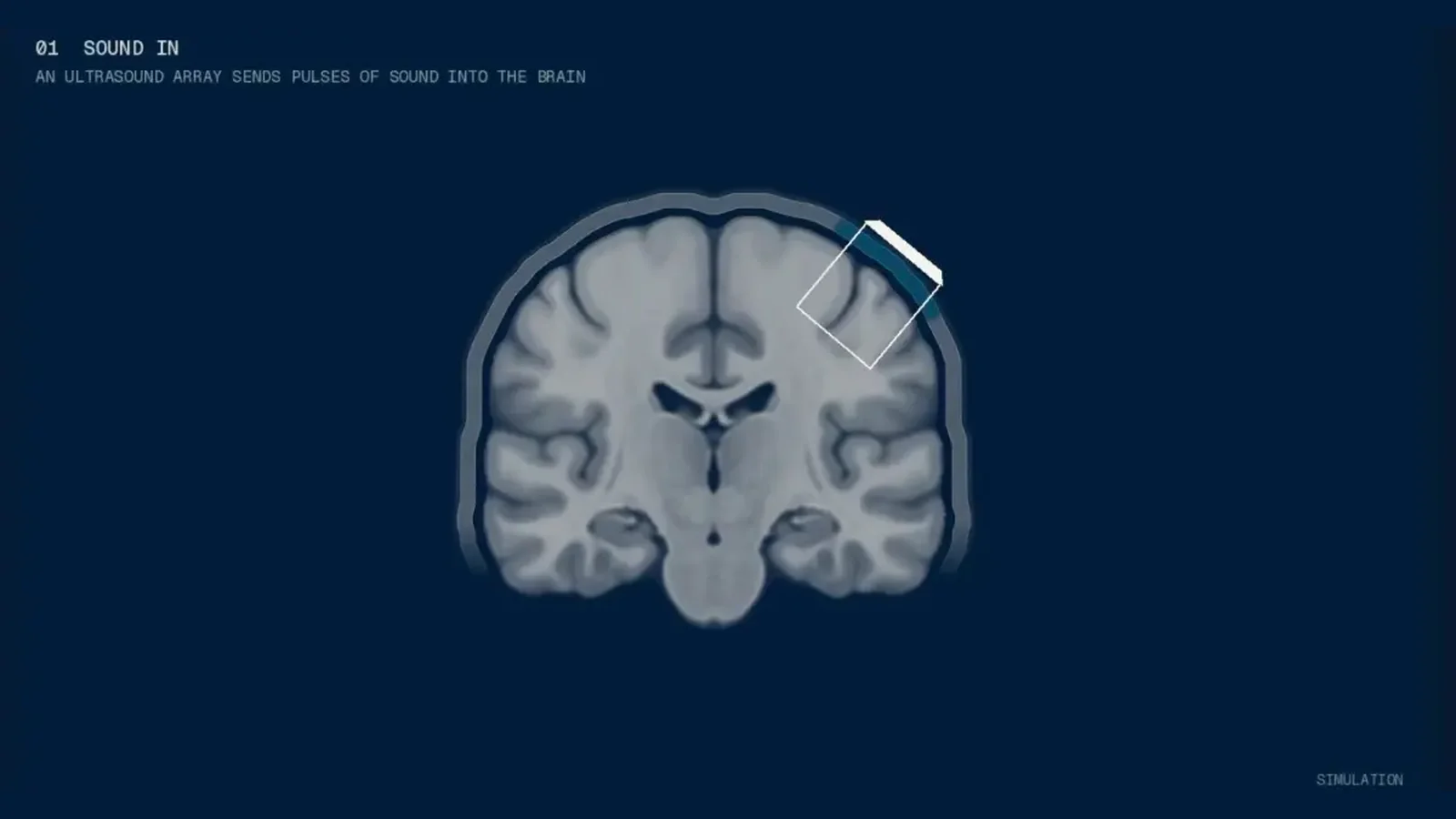
Here is the trick, explained by Inside BCI. A probe sends fast pulses of sound into the brain and listens to the echoes. Echoes off still tissue look the same each time. Echoes off moving blood change.
When part of your brain gets busy, blood rushes there. So by tracking blood flow, the system can see which areas are working and when. It is called functional ultrasound imaging.
Then AI models try to decode what those patterns mean.
The hard part: your skull
Bone gets in the way. The skull scatters and soaks up sound, and it does it differently in every person.
Biederman calls that the main challenge. Inside BCI notes the company says it is early and does not have a single answer for it yet.
That is why the first study is clever. It is enrolling two groups:
- Healthy adults, to try imaging through a normal skull
- Adults who had part of their skull replaced with a PEEK or Longeviti implant after a stroke, injury, or surgery
Those implants let sound through much more easily than bone. So they give Bridge a clean reference signal to compare with what it gets through real bone.
Participants wear a light 3D printed helmet that holds the probe against their head while they listen, watch, move, or speak on cue.
The founder and the chip
Biederman says that as a PhD student at UC Berkeley, he built the neural interface chip Neuralink used for its first implants. He then spent close to a decade at Google and Verily.
He also co-founded Forest Neurotech, a nonprofit that built a small ultrasound device to image the human brain.
The money comes from General Catalyst, reMind Capital, Sunflower Capital, and investor Scott Sandell, plus others.
Butterfly Network, which makes handheld ultrasound probes built on a chip, is licensing that chip tech to Bridge. The multi-year deal includes payments for access and milestones, plus commitments to buy Butterfly hardware. Neither side shared the dollar amount.
The bigger race
Bridge is not alone. Inside BCI points out that Merge Labs, co-founded by Sam Altman and two of Biederman’s former Forest colleagues, launched in January with a $252 million seed round. Merge also picked Butterfly as its ultrasound chip partner.
In China, ultrasound BCI startups Gestala and BCI-Sonics both raised big rounds this year.
So sound-based brain interfaces are quickly becoming their own lane next to implants.
What we don’t know
Bridge has not said how many people are in the study, when results come, or whether it is aiming at a medical product or a consumer one first. There is no regulatory plan public yet.
My take
The idea makes total sense. Implants work, but most people are never getting brain surgery for a computer interface.
Ultrasound is a smart bet because the hardware already exists and keeps shrinking onto chips. The skull is the boss fight. If Bridge can show clean brain signals through a normal skull, that is a huge deal.
$13.5 million is small next to Merge’s $252 million. But this is a very early science bet. The first real proof will be the study results, not the funding round.
So basically — pass it on.