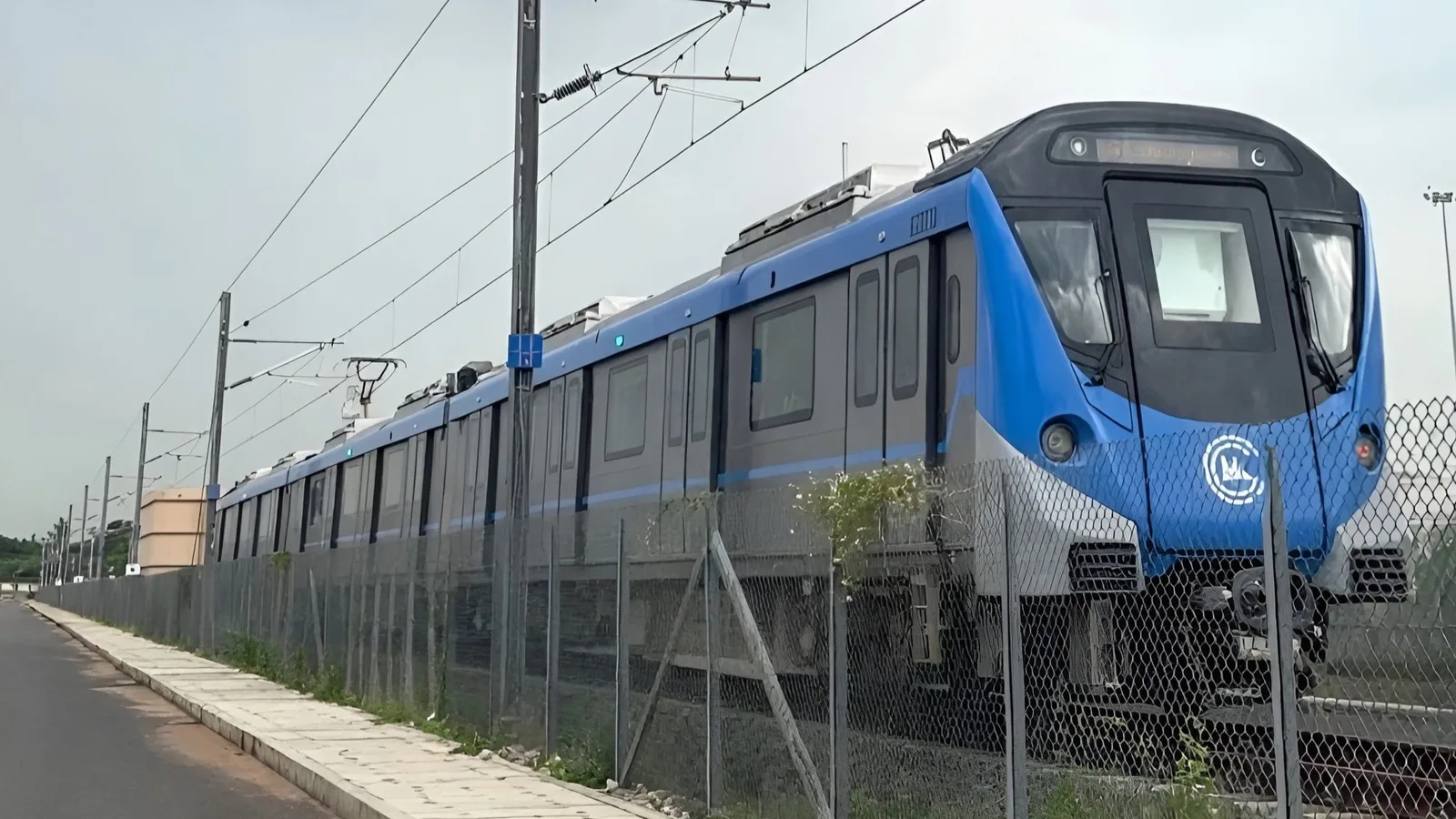
Chennai's New Metro Line Opens Today, With a Double Decker Section and Driverless Trains
The first 15 km stretch of Chennai Metro Phase 2 opened Sunday, from Poonamallee to Vadapalani with 11 stations and a 3.7 km double decker viaduct. The trains are built to run with no driver, but staff stay onboard until mid 2027.
So basically: Chennai, one of India’s biggest cities, opened the first piece of its huge new metro expansion today. The line runs about 15 km from the western suburbs into the city. Part of it rides on a double decker viaduct, and the trains are built to drive themselves. For now, though, people are still at the controls.
What opened
The new stretch runs from Poonamallee Bypass to Vadapalani. It was inaugurated on Sunday, Oct. 11, and passengers could ride starting at 4 p.m. local time.
The basics, from the Economic Times and Times of India:
- Length: about 15 km, or roughly 9 miles
- Stations open: 11
- Cost: about Rs 4,900 crore, a little over half a billion U.S. dollars
- Hours: 7 a.m. to 9 p.m. daily starting Monday
- Trains: every 10 minutes at rush hour, every 15 minutes otherwise
The 11 stations are Poonamallee Bypass, Poonamallee Bus Stand, Poonamallee Government Hospital, Karayanchavadi, Kumananchavadi, Kattupakkam, Iyappanthangal, Thelliyaragaram, Porur Bypass, Porur Junction, and Vadapalani.
The double decker part
This is the coolest piece. Between Porur Junction and Vadapalani, the line runs on a 3.7 km double decker structure. Two levels of elevated track stacked on top of each other, with a busy road underneath.
The whole stretch actually has 17 stations. Six of them sit on that double decker section and are not open yet, so trains roll right past them for now. Those are Alapakkam, Karambakkam, Valasaravakkam, Alwarthirunagar, Saligramam, and Avichi School.
Built to be driverless, but not yet
The new trains are designed for what India calls Unattended Train Operation. That means no driver at all, with everything watched from a control center in Koyambedu.
But the Times of India says they will not run that way until mid 2027. For now:
- Every train has two operators onboard
- The signals and trains are not fully synced yet, so operators brake by hand
- About 120 test scenarios still need to be checked before safety certification
- That testing happens between midnight and 5 a.m., after passenger service ends
Delhi Metro already runs driverless trains in India. Singapore and Dubai do too.
Getting here took a while. India’s metro safety commissioner gave conditional approval back in February, then final sign off in May with limits on speed and how often trains can run. Opening came about seven months after that first approval.
Train and fare numbers
- Train size: 3 cars, up to 900 passengers
- Top design speed: 80 km/h, but the average is about 32 km/h with stops
- Fleet at launch: 15 trains
- Max fare: ₹40 for the full ride, or ₹50 if you go on to the airport, Egmore, or Central station
Phase 1 trains are a little bigger, with 4 cars and room for 1,270 people.
This is just the start
The full Phase 2 plan is 118.9 km across three corridors. This stretch is a piece of Corridor 4, which will eventually run deeper into the city. The goal is simple: get people from the fast growing western suburbs into town without sitting in traffic.
My take
I am a sucker for double decker anything, and stacking two rail levels over a road is a smart way to build in a packed city where land is the most expensive thing around. Opening with operators onboard is the right call too. Get people riding now, finish the driverless testing at night, and flip the switch when it is proven. If Chennai hits mid 2027, it will be one of the bigger driverless metro systems around.
So basically — pass it on.