A Japanese Nursing Home Chain Is Betting on a Humanoid to Help Answer Nurse Calls
Charm Care, which runs more than 100 private nursing homes in Japan, is putting ¥300 million (about $2 million) into donut robotics. Its cinnamon humanoid has been on trial in one home since July.
So basically: Charm Care, a Japanese company that runs more than 100 private nursing homes, is putting ¥300 million (about $2 million) into humanoid startup donut robotics, and the two want its cinnamon robot to help staff answer nurse calls.
The deal
donut robotics announced it on Monday, Oct. 5. Charm Care, which trades on the Prime Market of the Tokyo Stock Exchange, is buying ¥300 million of newly issued donut shares.
It’s a capital and business alliance, so the money comes with a plan: build the robot’s skills inside real care homes, with real residents and real staff.
Charm Care’s homes are in the Kansai region and Greater Tokyo.
What the robot does now
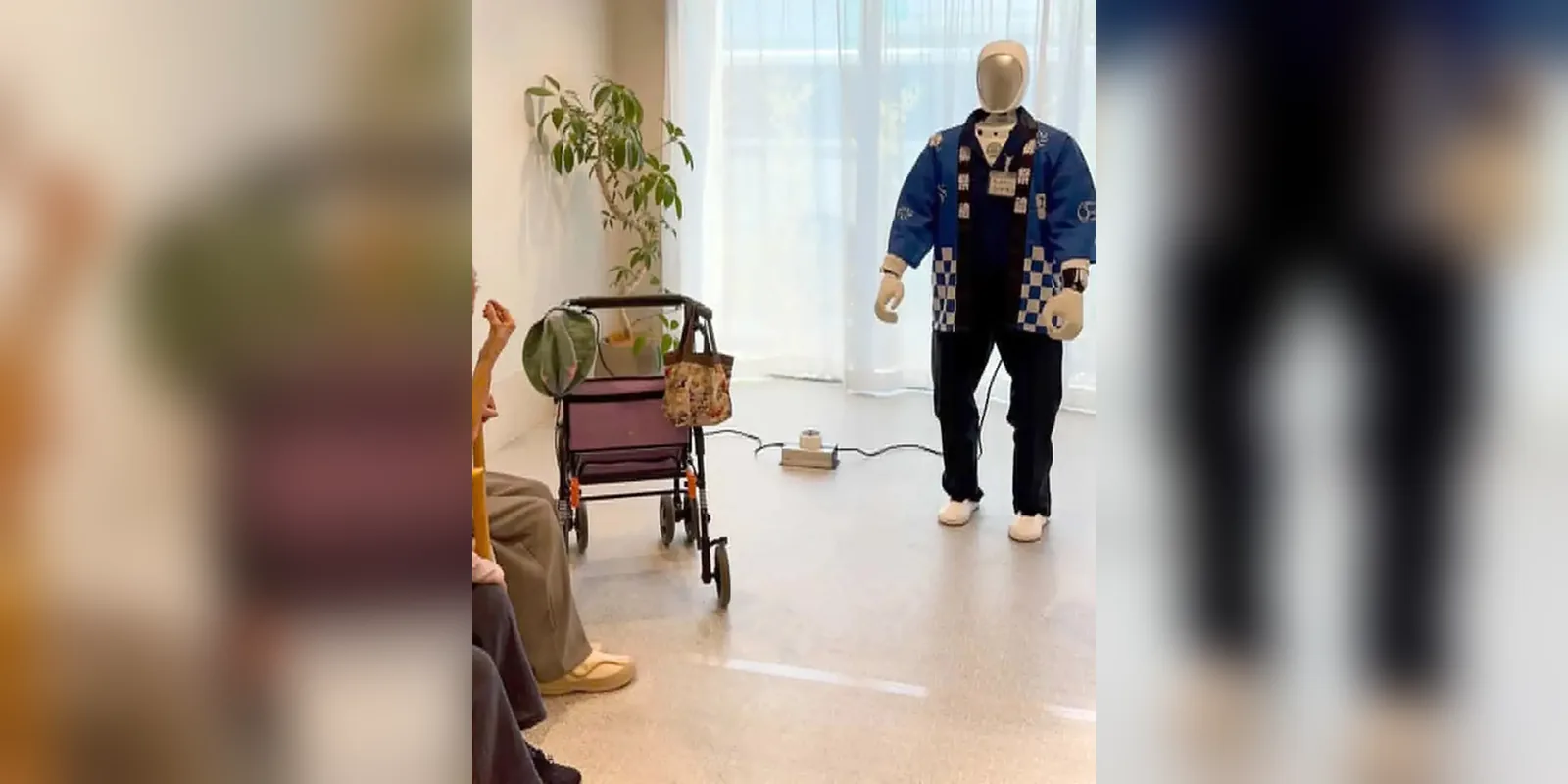
The two companies have been testing the humanoid at one Charm Care home since July 2026. So far it does patrols, walking the floors and watching.
donut says residents who spent time with cinnamon 1 “responded positively.” That’s the company’s word. It hasn’t shared any numbers.
What’s next
Nurse calls. When a resident presses the call button and says what they need, the robot would walk to them and help handle the request. Answering those calls takes up a big chunk of staff time in care homes, so even partial help matters. After that, the companies plan to add more jobs in stages.
donut is upfront that this is early. Its release says the Vision-Language-Action AI that controls the robot “is still at an early stage of development worldwide.” CEO Taisuke Ono put it plainly: “There is only little that cinnamon can do now.”
The robot
cinnamon 1 is about 170 cm tall and walks on two legs. donut announced it in January for factory, construction, eldercare, and security work.
donut says it can describe what it sees in words, using AI that reads both images and language.
It can learn movements from videos of people and from motion-capture data.
It can take gesture and finger commands instead of voice. donut has filed a patent on that, and says it helps in loud places and for people with hearing loss.
The body is built overseas, and donut adds its own AI. Its slides say the robot will become Japan-made in 2027 by switching to a new AI chip. A next model, cinnamon 2, is set to be officially announced this fall.
There’s also cinnamon mini, about 130 cm tall and 35 kg, for stores, hotels, and stage shows.
Why Japan
Japan is aging fast and running short on caregivers. Its health ministry estimates the country will need about 2.72 million care workers in fiscal 2040, up from about 2.15 million in fiscal 2022. That’s a gap of about 570,000 people.
Big companies are moving too. The same day, Panasonic’s chief AI officer told Nikkei the company plans to start making humanoid robots by 2029, starting with factories and warehouses.
Ono says he started donut 12 years ago in a garage in Kitakyushu because he wanted a small robot that could keep an eye on his mother, who lived far away.
My take
This is the useful kind of humanoid news. A nursing home company is putting in its own money, and the plan starts with one real, boring job. Nurse calls are a smart first target, because the robot can help just by showing up fast and passing along what the resident needs, long before it ever has to lift or touch anyone. cinnamon is nowhere near doing real care work. But saving staff a few trips down the hall every shift is a real win in a country that is running out of caregivers.
So basically — pass it on.