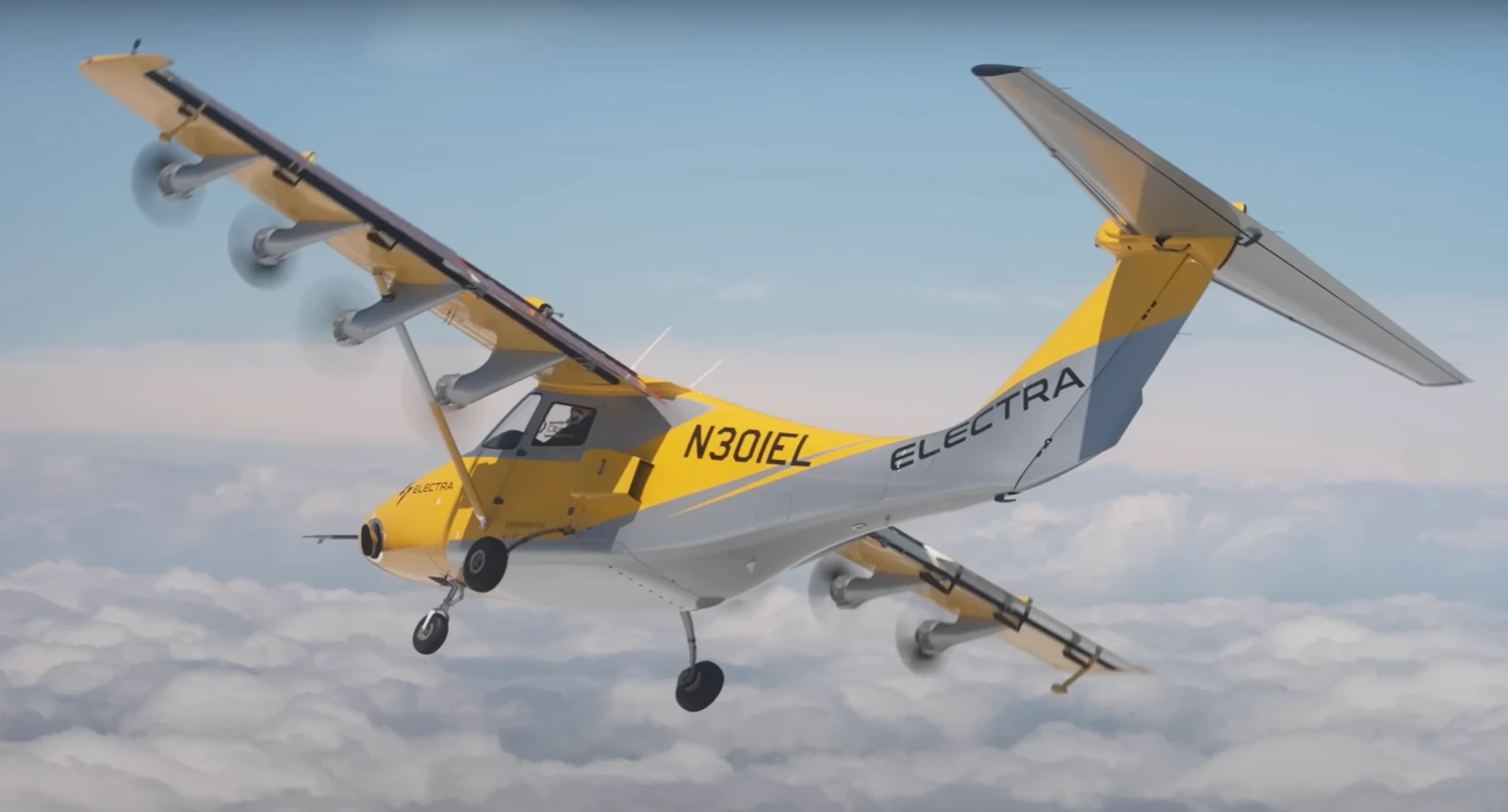
Electra Just Landed a Fixed-Wing Plane on a Commercial Airport Heliport
Under FAA’s eIPP in Virginia, Electra’s hybrid-electric EL2 used helicopter-style instrument procedures and off-runway pads: a blueprint for Ultra Short ops that skip congested runways.
Most Advanced Air Mobility demos fight for a new vertiport and a new vehicle class at the same time. Electra’s pitch this week was ruder: use the pads helicopters already have, and bring a fixed-wing that can live with them.
So basically: on Sept. 22, 2026, Electra said its hybrid-electric EL2 Ultra Short demonstrator completed first-of-its-kind flights from a heliport on the commercial ramp at Roanoke-Blacksburg Regional Airport, flying helicopter-style instrument procedures under the FAA’s eVTOL / AAM Integration Pilot Program.
What actually flew
The campaign sat inside Virginia’s Smart Airspace work with Virginia Tech, the Virginia Department of Aviation, PennDOT as Virginia’s lead eIPP participant, and the FAA. Electra’s release lists point-in-space procedures and dedicated instrument routings across Virginia Tech/Montgomery (KBCB), Roanoke-Blacksburg (KROA), Blackstone AAF (KBKT), plus sites in Newport News and Richmond. Takeoffs and landings used small heliports, vertiports, taxiways, and other pads that conventional airliners do not use.
CEO Marc Allen’s line is the product thesis: fixed-wing Ultra Short aircraft can reach places airplanes were not designed to access, feed major airports without adding runway congestion, and pull air service closer to where people already are. Product strategy lead Parker Vascik called it a first step toward guidelines for Ultra Short ops at major airports and novel access points, complementing traffic instead of joining the runway queue.
This is not a passenger eVTOL type-certification victory. It is operational data: aircraft performance versus procedure requirements, approach and departure designs workshopped with the FAA, and air-traffic concepts for landing off the runway safely.
How this differs from the eVTOL passenger race
Joby and BETA’s North Carolina eIPP flights the same week (medical and regional legs between Dare County, Raleigh Executive, Pitt-Greenville, and RDU) are the more familiar AAM story: electric aircraft proving useful corridors. Electra is adjacent but different. The EL9 Ultra Short is marketed as helicopter-like access with fixed-wing economics: Electra claims about 2.5× the payload and 10× the range of helicopters/eVTOLs at roughly 70% lower operating cost, with lower certification risk than pure vertical-lift air taxis. Those are company claims; the Virginia flights are the procedure proof, not the cost proof.
Strategic backers include Lockheed Martin Ventures, Honeywell, and Safran. Electra cites U.S. Air Force, Army, Navy, and NASA contracts plus 2,200+ letters of intent from 60+ commercial customers. LOIs are not firm orders. The eIPP data is what regulators can actually use.
Progress and limits
Progress: a commercial airport host, helicopter-style IFR procedures, and off-runway pads used by a fixed-wing hybrid in a federal pilot program, the boring infrastructure layer AAM needs whether the vehicle tilts, lifts, or blown-lifts. Limits: demonstrator, not EL9 passenger service; partner-heavy state program, not nationwide ops approval; and no claim that airlines will rework schedules tomorrow. Runway congestion does not vanish because one EL2 used a heliport in Roanoke.
Watch whether FAA turns this month’s data into published procedure templates, whether EL9 advances on the same access model, and whether other eIPP states copy the “use existing vertical pads” shortcut. The implication is practical: the scarce asset may not only be a certified air taxi. It may be the instrument approach that lets a short-field plane share an airport without stealing a runway slot.
So basically — pass it on.