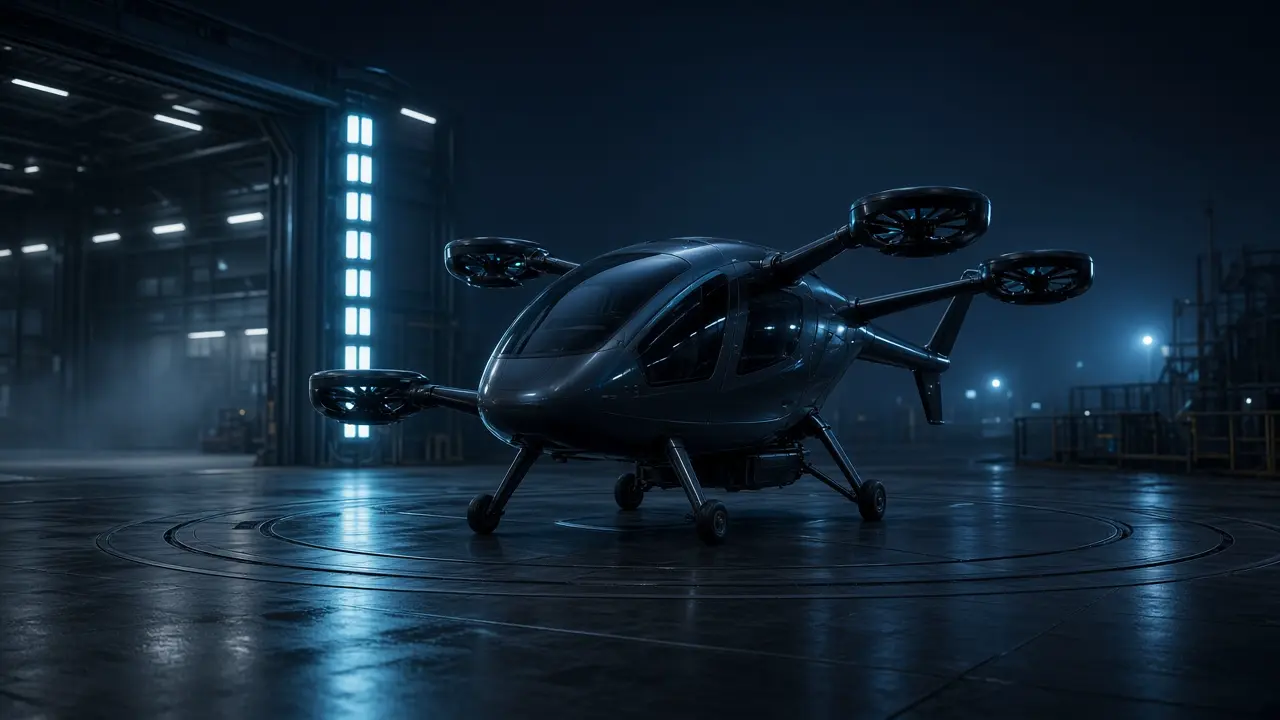
eVTOLs Don't Need Another Skyline Flex. They Need a Stamp.
Air taxis win or lose on regulators, noise, and unit economics — not another CGI flight over downtown.
The eVTOL pitch is seductive: skip traffic, land on a rooftop, arrive in minutes. The renderings are excellent. The hard part is everything that happens after the rendering.
So basically: for electric vertical takeoff aircraft, certification, noise, and cost-per-seat-mile are the product. The airframe is table stakes.
Why certification dominates the timeline
Aviation doesn’t ship MVPs to paying passengers. Type certification, production certificates, operating approvals, and pilot training pathways form a multi-year stack. A company can have a beautiful prototype and still be years from scheduled service.
That isn’t bureaucrats “holding back the future.” It’s how you keep novel aircraft from becoming news for the wrong reason.
Noise is a city veto
Even a certified aircraft loses if communities reject the sound profile. Vertiports need neighbors who can live with frequent short flights. Quiet is a feature with political weight — treat it like range and payload.
Unit economics without the fog
Ask:
- How many seats, realistically, after battery and structure mass?
- What’s the utilization assumption (hours/day)?
- What’s energy cost vs. helicopter alternatives on the same routes?
- Who pays for the vertiport — and who fights the zoning?
If the business case only works at unicorn utilization with free infrastructure, it’s a slide deck, not a network.
Near-term realism
Expect early routes that look like premium point-to-point corridors, not ubiquitous city-hopping. Airports to CBDs. Tourism links. Medical and logistics niches. Mass transit replacement is a later chapter, if it arrives at all.
We’ll cover first certified passenger operations when they’re real. Until then, treat every skyline flyover as aspiration with a regulatory critical path.
So basically — pass it on.