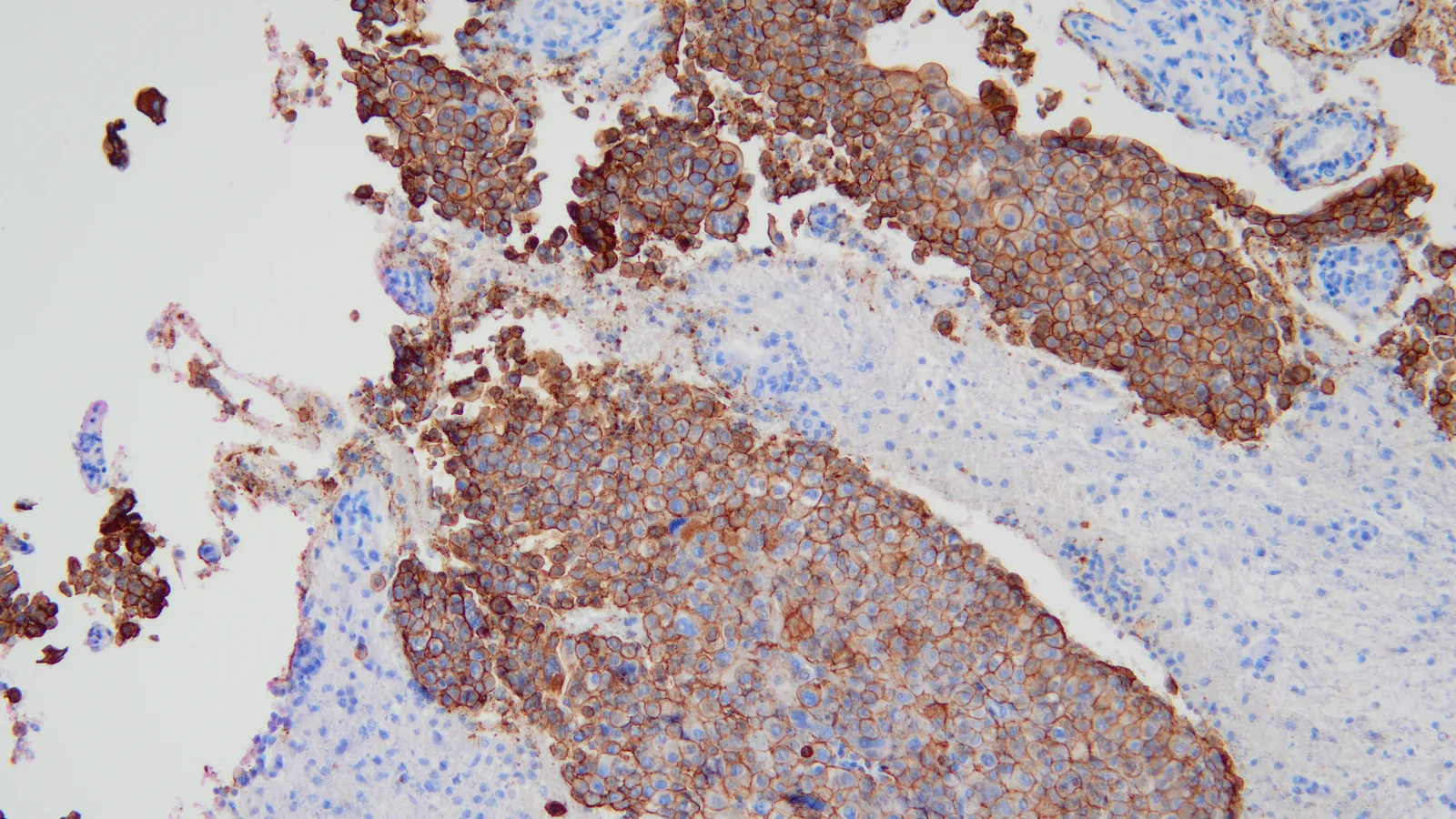
FDA Approves Tukysa as a Chemo-Free Maintenance Pill for Advanced HER2+ Breast Cancer
On Oct. 7, the FDA approved Pfizer's Tukysa with trastuzumab and pertuzumab as first-line maintenance for advanced HER2-positive breast cancer. In the HER2CLIMB-05 trial, it pushed median progression-free survival from 16.3 to 24.9 months, with more liver side effects.
So basically: The FDA just approved a pill called Tukysa for an earlier stage of treatment in advanced HER2-positive breast cancer. After a first round of chemo works, patients can add Tukysa to their antibody drugs to keep the cancer in check longer. In the trial, it added more than eight months before the cancer grew back.
What HER2-positive means
Some breast cancers make too much of a protein called HER2. It acts like a gas pedal for tumor growth.
About one in five breast cancers is HER2-positive. These used to be some of the hardest to treat. Drugs that target HER2 changed that.
How treatment works today
For HER2-positive breast cancer that has spread, the standard first step is three drugs together. Two are antibodies, trastuzumab and pertuzumab. The third is a taxane, a type of chemo.
After several rounds, if the cancer is under control, doctors usually drop the chemo. Patients stay on the two antibodies as “maintenance” to hold the cancer back.
Eventually, for many people, the cancer starts growing again.
What the FDA approved
On Oct. 7, the FDA approved Tukysa (tucatinib) together with trastuzumab and pertuzumab as maintenance treatment. It is for adults whose HER2-positive breast cancer is advanced and cannot be removed with surgery, after that first chemo phase.
Tukysa is made by Seagen, which is owned by Pfizer. It is a pill, taken twice a day. It blocks HER2 from inside the cell, while the antibodies block it from outside.
This is not Tukysa’s first approval. Back in April 2020, it was approved with trastuzumab and the chemo pill capecitabine, for patients who had already tried other HER2 drugs. This new approval moves it much earlier, to first-line care.
The trial
The study is called HER2CLIMB-05. It enrolled 654 patients.
Everyone had already finished 4 to 8 cycles of trastuzumab, pertuzumab, and a taxane, with no sign the cancer was growing. Patients with brain metastases could join too.
Then they were split into two groups. Both kept taking the two antibodies. One group added Tukysa. The other added a placebo.
The results
The main measure was progression-free survival. That is how long patients lived before their cancer grew or they died.
- With Tukysa: a median of 24.9 months
- With placebo: a median of 16.3 months
That works out to about a 36% lower risk of the cancer progressing or death.
What we don’t know yet is whether people live longer overall. The FDA says overall survival data were not mature at the time of the analysis.
The results were published in the Journal of Clinical Oncology this year.
The side effects
There is a real cost.
According to OncLive, serious side effects (grade 3 or higher) hit 42.3% of patients on Tukysa, versus 24.4% on placebo.
Liver problems stood out. A key liver enzyme, ALT, rose to a serious level in 13.5% of Tukysa patients, compared with 0.6% on placebo.
About 13.8% of patients stopped Tukysa because of side effects, versus 4.6% on placebo.
The label carries a boxed warning, the FDA’s strongest kind, for liver toxicity. It also warns about diarrhea, harm to a developing baby, and higher creatinine levels in the blood, though without hurting kidney function.
What doctors are saying
Erika Hamilton of Sarah Cannon Research Institute, who led the trial, called it a “chemotherapy-free maintenance strategy,” according to Healio.
Mayo Clinic oncologist Ciara O’Sullivan told OncLive that not every patient needs a stronger regimen, and that better biomarkers are needed to tell who benefits most.
My take
Eight extra months without the cancer growing is a big deal. And doing it without going back on chemo matters a lot for daily life.
But I want to see the overall survival numbers. Delaying progression is good. Living longer is the real goal.
The liver side effects are also serious. This will mean regular blood tests and some hard conversations about whether the trade is worth it.
Still, for people with advanced HER2-positive breast cancer, this is a new option at a key point in treatment. That counts.
So basically — pass it on.