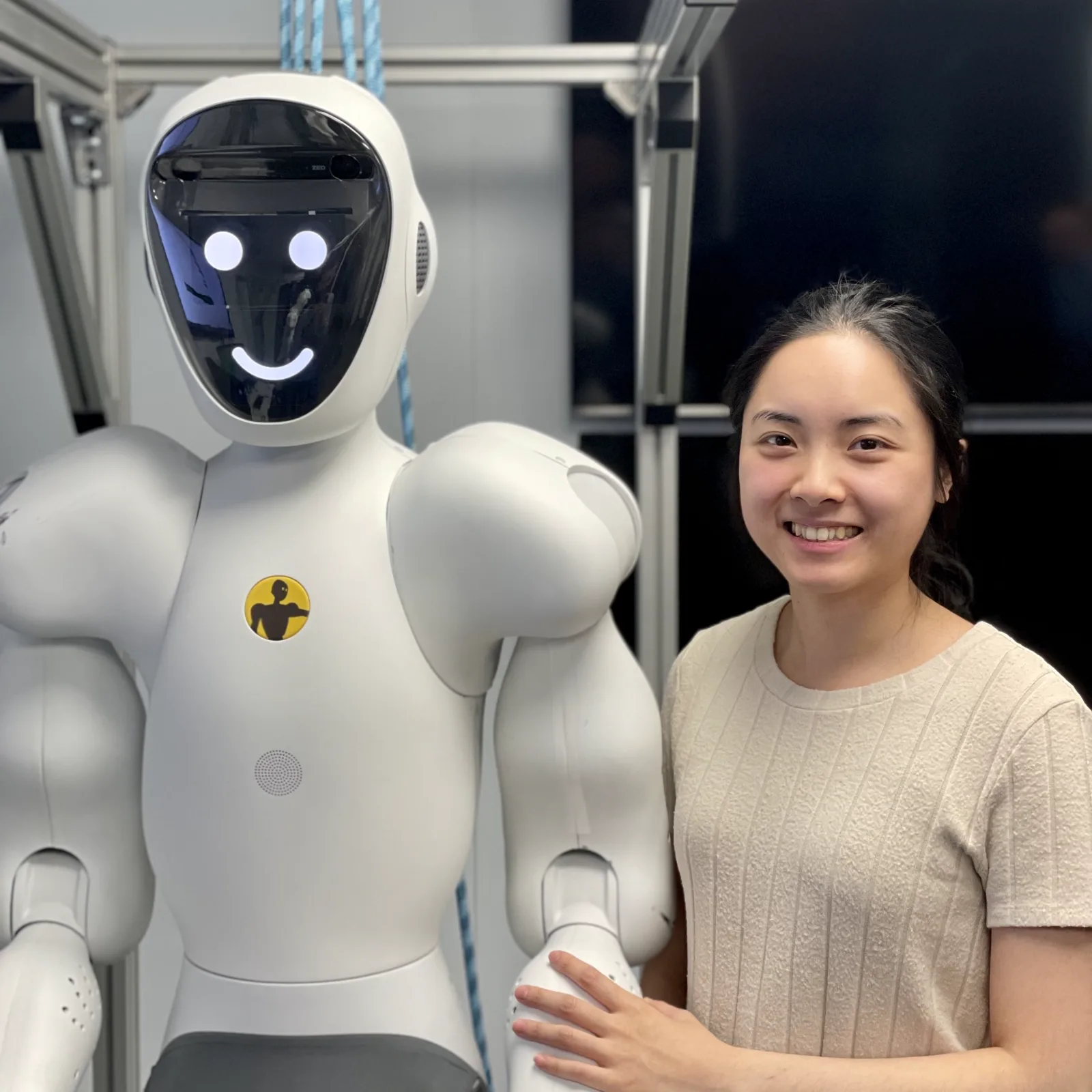
Feather Just Put a $29,990 Humanoid on the Market
A California startup exited stealth with a modular wheeled humanoid at roughly half Unitree’s edu price, already past $1M in sales, deliberately not building the brain.
Most humanoid headlines are about who will own the general-purpose brain. This week a California startup took the opposite bet: sell the body cheap, let someone else bring the model.
So basically: Feather Robotics came out of stealth with a modular, wheeled, dual-arm robot priced at $29,990 (about half what Unitree’s H2 Edu lists for) and said it already cleared $1 million in revenue selling small batches into restaurants and labs.
What shipped, and what it is not
TechCrunch reported the launch on Sept. 24, 2026; Forbes followed on Sept. 25 with the exact sticker. Feather is a bimanual mobile manipulator: two 7-DoF arms, a rising torso, and a wheeled base rated for roughly 10 hours of operation. Customers can change arm lengths and pick their own compute and AI stack (Nvidia, Skild, Physical Intelligence, Generalist, and peers). Co-founder Hoa Mai framed it bluntly: you still cannot buy a Tesla Optimus and develop on top of it.
That is the product thesis. Feather is not racing Figure or Tesla to a foundation model that works everywhere. It is trying to be the hardware platform developers ship tasks on now, while the ChatGPT-for-robots moment is still debated.
Mai sold a prior humanoid startup to 1X, then partnered with Parsa Bakhtiari, a former Tesla Model 3 engineer. Gradient Ventures led a $7.6 million pre-seed. Forbes and TechCrunch both note the company has burned only a fraction of that raise while field-testing for about a year.
Where the robots already work
Feather is not naming most customers. It does say units are cooking in restaurants in Japan and cleaning science labs. That matters more than the launch video: the company claims product-market contact at a price where a small business can compare robot cost to a year’s labor plus HR, not to a seven-figure R&D platform.
Gradient GP Darian Shirazi’s framing, via TechCrunch, splits the U.S. landscape into household startups (Sunday and peers), general-purpose heavyweights (Figure, Tesla), and Feather as the modular platform play. Mai acknowledges borrowing lessons from Chinese makers like Unitree, then notes foreign-made models face tighter U.S. entry, which leaves a domestic gap at this price.
Progress and limits
Progress: a buyable U.S. humanoid-class platform under $30k, modular enough to swap arms and models, with early revenue and real deployments instead of another warehouse-only teaser. Limits: this is still a wheeled torso, not a biped climbing stairs into your kitchen. “Humanoid” here means dual arms and a human-height workspace, not walking. Customers still have to make the software useful. Feather is betting thousands of application companies will exist in five years and that the scarce asset is a stable body those companies can target.
Watch whether volume follows the $1M milestone, whether named U.S. industrial customers appear, and whether the open-model pitch holds when one foundation model starts winning deployments. The implication is simple: if the brain remains contested, the near-term business may be selling bodies that any brain can rent.
So basically — pass it on.