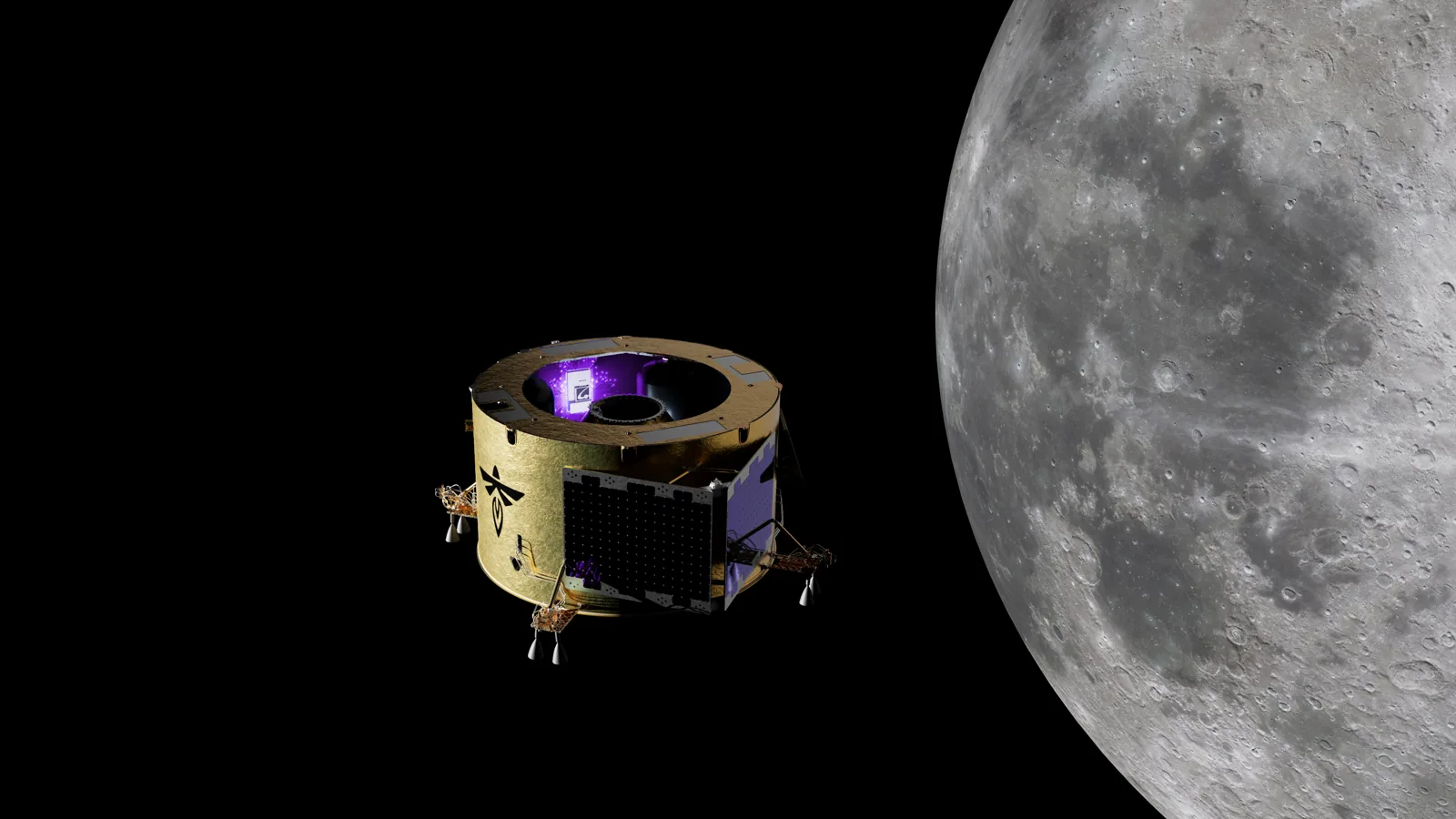
Firefly Booked a Starcloud Computer for Lunar Orbit
On Sept. 30 Firefly said Starcloud's SC-1L processor will fly on Elytra around the Moon. The mission is no earlier than 2028, on Firefly's third lunar flight.
So basically: On Sept. 30, Firefly said it will fly a Starcloud computer on its Elytra spacecraft in orbit around the Moon. The payload is called SC-1L. The flight is no earlier than 2028.
What is supposed to fly
Starcloud’s processor rides on Elytra. Firefly says it will take in data from Solux, Firefly’s onboard vision system, run high-power AI computing in orbit, and send the processed data back to Earth. Solux used to be called Sol3. Firefly says it lets a spacecraft navigate, land, and track its orientation where GPS does not work.
Starcloud’s cofounder and CTO, Ezra Feilden, said the company already ran and trained AI models on enterprise-grade GPUs in low Earth orbit, and this flight is that work moved to lunar orbit. The Firefly release does not name the chip or the power draw.
The mission is Firefly’s third lunar flight, targeted no earlier than 2028. On that flight Elytra first carries Firefly’s Blue Ghost lander and acts as its communications relay. Blue Ghost is aimed at the Moon’s Gruithuisen Domes under NASA’s Commercial Lunar Payload Services program. After the landing work, Elytra stays in lunar orbit for five years for customer payloads and imaging, including the Starcloud demo. Firefly also says each Elytra is designed to stay up to five years.
Firefly says this is the second Elytra it plans to put in lunar orbit. The first is tied to Blue Ghost Mission 2, targeted no earlier than 2027.
The other computer on Elytra
Firefly separately pointed at a recent NVIDIA deal for its Ocula lunar imaging service. That one uses an NVIDIA Jetson module and Firefly’s own AI software, through its SciTec subsidiary, to process images on orbit before they come down. That is not the Starcloud box. Ocula is Firefly’s imaging product. SC-1L is a customer payload on a later flight.
My take
A signed payload on a 2028 mission is a reservation. It is not a data center around the Moon. The useful part is narrow: process data up there, then send the result home, because the downlink from lunar orbit is the bottleneck. Firefly still has to fly Blue Ghost Mission 2, then this third mission, before SC-1L is anything but a line on a manifest.
So basically — pass it on.