Google is launching its first AI chip satellite on Oct. 1.
Project Suncatcher's first test satellite, MVP, carries four Google TPUs and rides SpaceX's Transporter-18 rideshare from Vandenberg. It will run Gemini in 15-minute bursts.
Google is sending its own AI chips to orbit this week.
So basically: The first test satellite for Project Suncatcher, Google’s plan to run AI computing in space, launches Thursday, Oct. 1. It carries four Google TPUs and rides on SpaceX’s Transporter-18 rideshare.
The launch
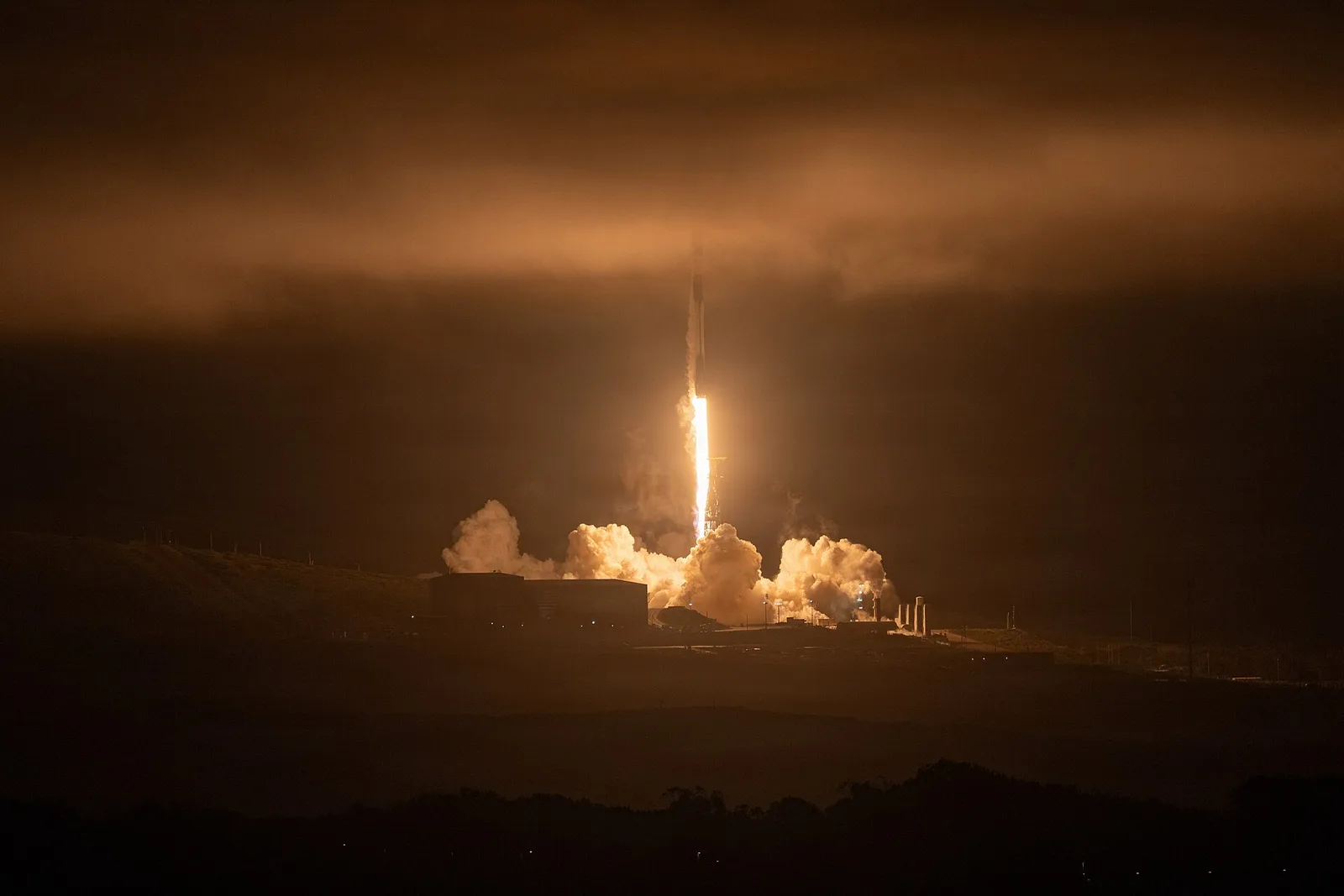
SpaceX is targeting Oct. 1 for Falcon 9 from Space Launch Complex 4E at Vandenberg Space Force Base in California. The 58-minute window opens at 11:18 a.m. PT (2:18 p.m. ET). The backup is Oct. 2 at the same time. Transporter-18 is carrying 130 payloads, and Google’s is one of them.
The satellite
Ars Technica reports the satellite is called MVP and is about the size of a refrigerator. Its solar panels supply about 1 kilowatt, per The New York Times.
Google didn’t build the spacecraft. Planet built it. Google’s original plan was two custom satellites in 2027, but it wanted to move faster, so it put its chips into a satellite Planet had already built for an early test.
Google will run Gemini models on the chips, but not nonstop. Ars reports the cooling system can only handle about 15 minutes at a time. Then the chips shut down so the radiator can catch up. The satellite is expected to run for a few months.
What Google already tested
These are regular TPUs, the same kind Google uses on the ground, not chips built for space. Google says:
- Launch loads reach up to 10 g, and parts like the chips can see 50 to 100 g. Google shook the satellite on all three axes and the hardware held up.
- It hit Trillium TPUs with a proton beam at UC Davis’s Crocker Nuclear Laboratory while they ran AI workloads. They survived a radiation dose greater than a five-year space mission.
- It tested the cooling setup in a thermal vacuum chamber. The chips connect to aluminum and copper heat pipes that carry heat to a radiator, per Ars.
Why space
Google says satellites in low Earth orbit get near-constant sunlight and up to eight times more solar power than panels on Earth. The long-term idea is clusters of satellites, each with dozens of TPUs, linked by lasers. Google plans to test those laser links in 2027 with two satellites.
My take
This is a small test. Four chips, 1 kilowatt, and 15 minutes of compute at a time is nothing like a data center, and Ars reports the team expects it will be years before Suncatcher is a product. Heat looks like the hardest part, and this flight is the first time Google gets real numbers on it from orbit.
So basically — pass it on.