The ISS Is Closing. Pharmaceuticals Eye Space Manufacturing.
As the ISS winds down, drugmakers are lining up commercial stations and return capsules — and talking to regulators about medicine made in orbit.
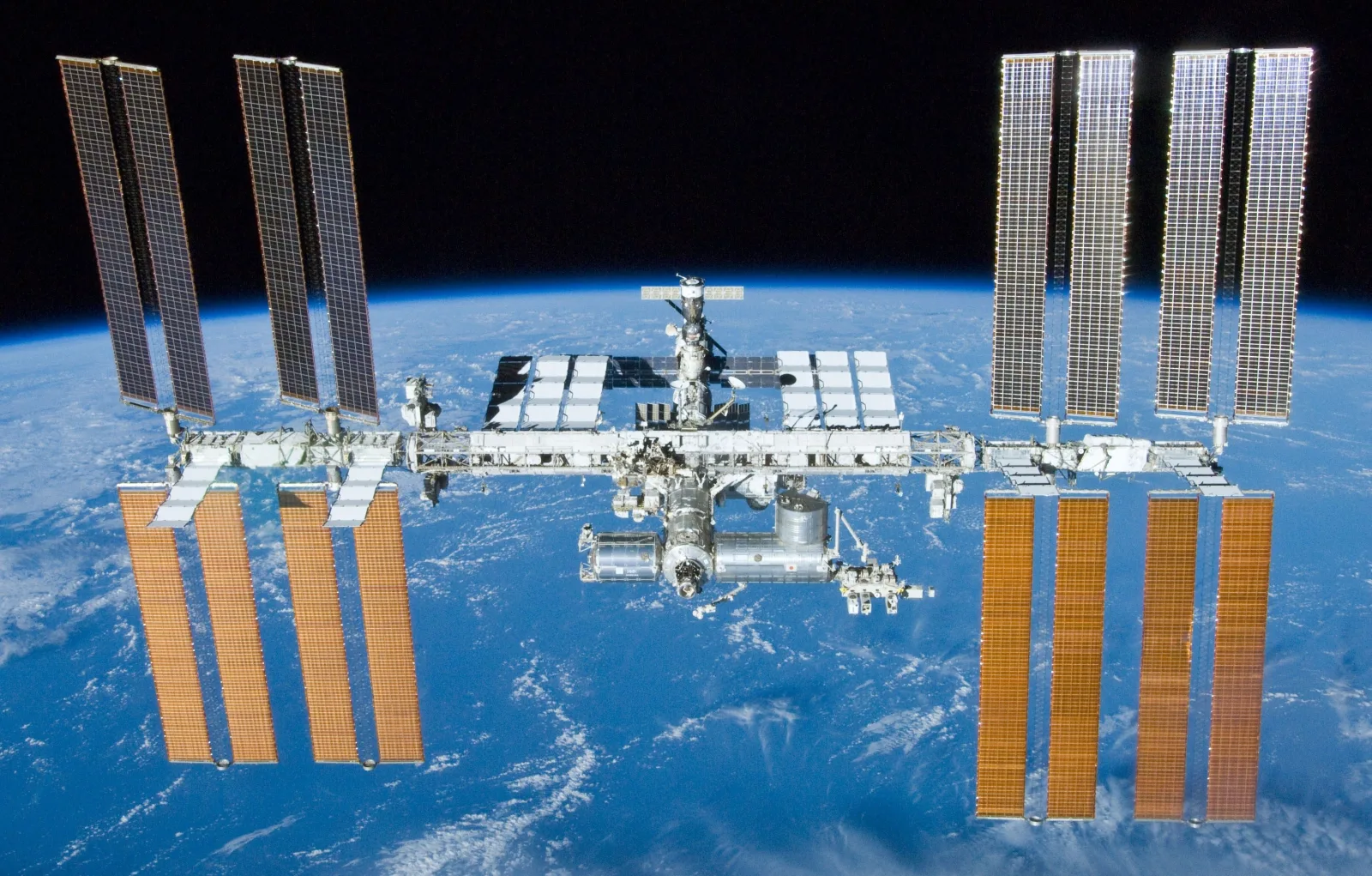
Space drug research has mostly lived on the International Space Station. That station doesn’t have forever.
So basically: On Sept. 17, 2026, Reuters reported what drugmakers and biotech firms are doing as the ISS heads toward retirement by the end of the decade. They’re lining up commercial platforms — stations from Starlab, Vast, and Axiom Space, plus return capsules from companies like Varda Space Industries — and talking with regulators about how you approve a medicine made in microgravity. The science case is old. The manufacturing and approval case is new.
What already flew
Researchers have long studied how microgravity lets cells and particles settle in ways that are hard to copy on Earth. That isn’t theory anymore. It’s a short list of named programs.
LambdaVision is building an artificial retinal implant that needs proteins and polymers layered carefully onto a scaffold. Reuters reported it has completed nine ISS missions since 2018 and hopes to begin clinical trials in 2028. Auxilium Biotechnologies has used a 3D bioprinter on the ISS to manufacture structures containing human liver, kidney, and cartilage cells. Auxilium’s vice president of engineering, Isac Lazarovits, told Reuters the company sees that as a step toward transplantable tissues made in orbit. Merck collaborated on ISS research that informed a subcutaneous formulation of Keytruda — a faster, under-the-skin option versus intravenous infusion for its top-selling cancer immunotherapy.
Those programs prove microgravity can change how materials behave. They don’t prove you can run a reliable production line upstairs.
What the ISS was built for
ISS National Lab chief scientist Michael Roberts told Reuters the station works more as a place to try ideas than a place to make products at scale. Lab space, astronaut time, and return flights are scarce. Experiments can take months or years to repeat, which slows refinement of manufacturing techniques. Useful for research. Not built as a production line.
That bottleneck is why the commercial pitch matters. Next-generation stations are being designed with scale in mind — higher production volumes over time, and potentially lower cost than ISS access. Ariel Ekblaw, CEO of the Aurelia Institute, told Reuters that growth of commercial orbital infrastructure could make routine pharmaceutical research and manufacturing more economically viable.
Auxilium has already signed agreements with companies developing post-ISS orbital platforms. A Bristol Myers Squibb spokesperson told Reuters that labs tailored to pharma could include more automation, dedicated manufacturing areas, specialized crew training, and more predictable launch and return schedules — things the ISS never really offered as a product.
Stations, capsules, and the return problem
The map after ISS isn’t one company. Starlab, Vast, and Axiom are building privately operated stations meant for longer-duration work. Varda is building autonomous capsules designed to process materials in orbit and bring them home. Companies say the new platforms could mean more frequent access, dedicated manufacturing gear, and more commercial flexibility.
Starlab chief scientist Luis Zea told Reuters the plan is to let companies rent laboratory capacity and use shared equipment rather than build their own orbital infrastructure. That rental model is closer to how terrestrial contract manufacturing works than to booking a one-off ISS experiment slot.
Launch is less of the story than it used to be. Commercial rockets made getting mass up easier. Executives told Reuters that return capacity is the larger bottleneck — teams often can’t design the next experiment until the previous results are back. Predictable return schedules matter as much as launch cadence if anyone wants a real process, not a photo op.
Regulatory hurdles
Regulators have not yet set a dedicated pathway that says a product manufactured in orbit meets the same standards as one made on the ground. Max Haot, CEO of Vast, told Reuters the lack of a defined regulatory process could be a more persistent obstacle than transportation.
The FDA and NASA signed a memorandum of understanding in 2018 covering biomedical research and product development during space missions, but that MoU did not create a framework for regulating and approving finished products made in orbit. The FDA did not respond to Reuters’ requests for comment.
Britain’s Medicines and Healthcare products Regulatory Agency (MHRA) said in March it would work with the UK Space Agency on guidance for medicines manufactured in space. It expects to publish a roadmap later this year — potentially the first major regulator to outline a formal approval pathway. That is progress. It is also still a document, not a cleared product.
What’s actually at stake
The question isn’t whether microgravity can help certain drugs or materials. Named companies already have flight data. The question is whether low Earth orbit gets reliable manufacturing capacity after NASA’s flagship station goes offline — long-duration work on stations, process-and-return on capsules, and regulators who can put a stamp on the result.
Roberts told Reuters the ISS laid groundwork by giving scientists continuous access to a microgravity lab and long-period data. He said the industry is looking for at least an order of magnitude leap in those capabilities on commercial platforms.
What to watch
Press releases are easy. Working modules and approved return paths aren’t. Watch who flies first on a steady schedule after ISS retirement, whether return cadence actually improves, and whether FDA-, MHRA-, and EMA-style pathways keep up. If pharma treats orbit like part of a real supply chain, the story isn’t the rocket. It’s whether anyone can book production time and bring a finished product home.
So basically — pass it on.