Kawasaki Built a Dog-Shaped Home Robot for Aging Japan
On Oct. 6 Kawasaki showed Home LEO, a physical-AI companion meant to watch over older adults at home, fetch items, and loop in family or carers. Launch target is fiscal 2028.
So basically: Kawasaki Heavy Industries rolled out a dog-shaped home robot on Tuesday, Oct. 6, built to live with older adults, talk with them, watch for trouble, and hand them things. It is still a prototype. The company wants it on sale in fiscal 2028.
What Home LEO is
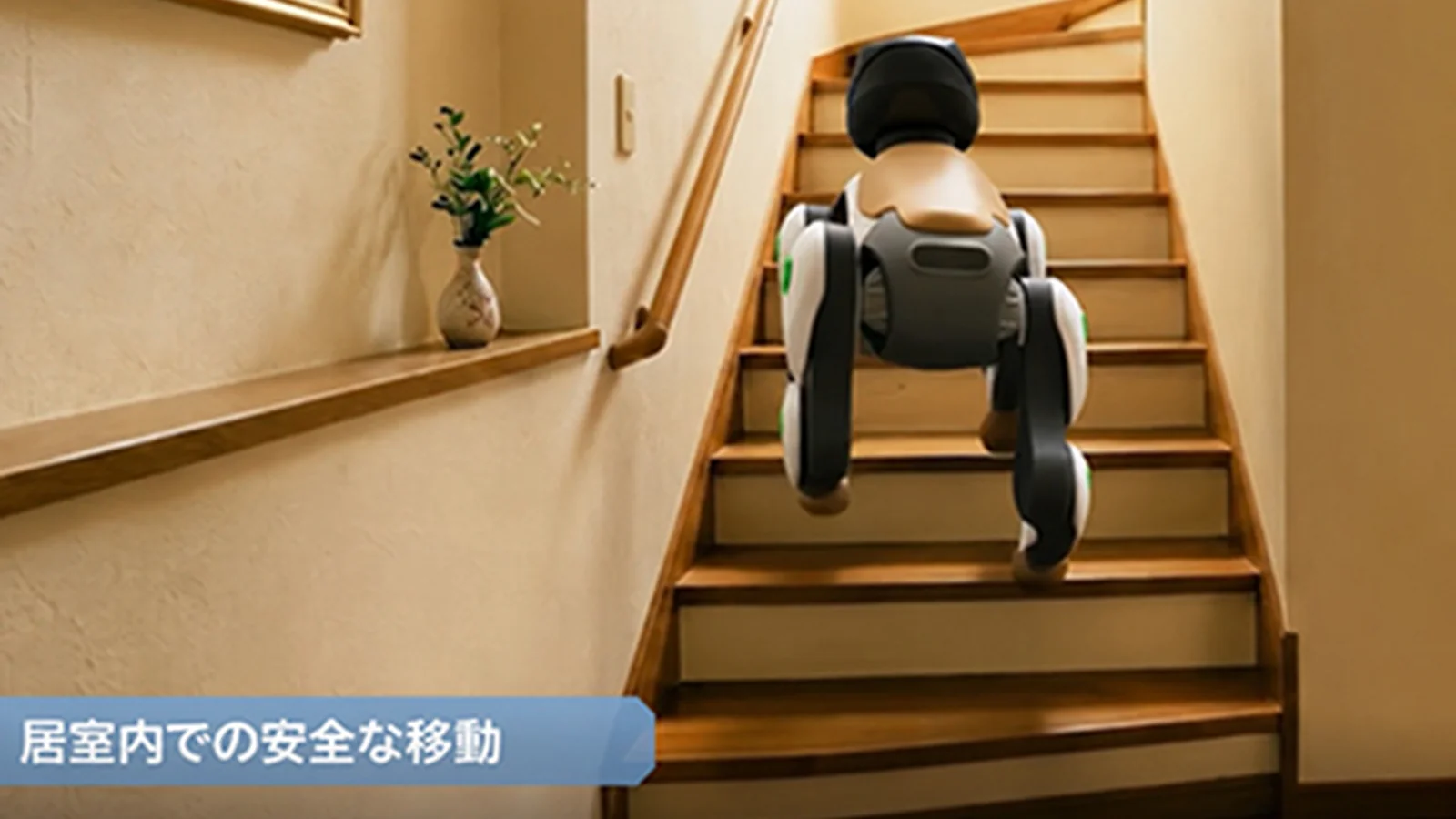
Home LEO is a four-legged social robot for the healthcare sector. Kawasaki says it uses physical AI to recognize a room, decide what to do next, and act on its own without a remote pilot for every step.
The name is a stretch of three English phrases Kawasaki lists: Linking Life, Empowering You, and Optimizing. The marketing line is that the robot helps older people stay connected to the home they already know.
At a Tokyo business briefing, President Yasuhiko Hashimoto asked where his smartphone was. Home LEO said it was on the table, then went and picked it up. Japan Times reported the demo on Oct. 7.
Prototype size from Kawasaki: about 640 mm long, 675 mm tall, and 390 mm wide. Kneeling height is about 830 mm. The company notes those figures can change before launch.
What it is supposed to do
Kawasaki groups the product into four jobs.
First, learn each person’s habits around food, clothing, and housing, then talk in a way that fits that person over time.
Second, watch daily life for falls, changes in physical condition, fire hazards left unattended, and visitors at the door. It should prompt the user and loop in family or care professionals when something looks wrong.
Third, help with ordinary tasks like getting around the home and finding or handing over items, so daily life takes less effort.
Fourth, with user consent and under managed security, record conversation and routine wellness data and share it with medical and nursing partners so home care, clinics, and facilities stay in sync.
Why Kawasaki is doing this
Japan’s care system faces fewer workers, uneven regional coverage, and rising social security costs. Kawasaki argues that longer safe years at home can cut spending and ease the load on families.
Home LEO sits beside other Kawasaki healthcare products: the hinotori surgical robot, the FORRO indoor delivery robot, the semi-humanoid Nyokkey, and the mapxus location service. The pitch is one stack from hospital floor to living room.
Next steps are demonstration trials with Japan’s health and industry ministries, local governments, care sites, and AI partners before a fiscal 2028 launch.
My take
A dog shape is an easier living-room sell than a full humanoid. Fetching a phone on stage is a clean demo of perception plus grasp. The hard product is trust: always-on watching, health alerts, and clinic data sharing. Fiscal 2028 is far enough that hardware and policy can both change. Watch the ministry trials and fall-detection false-alarm rates, not the press kit.
So basically — pass it on.