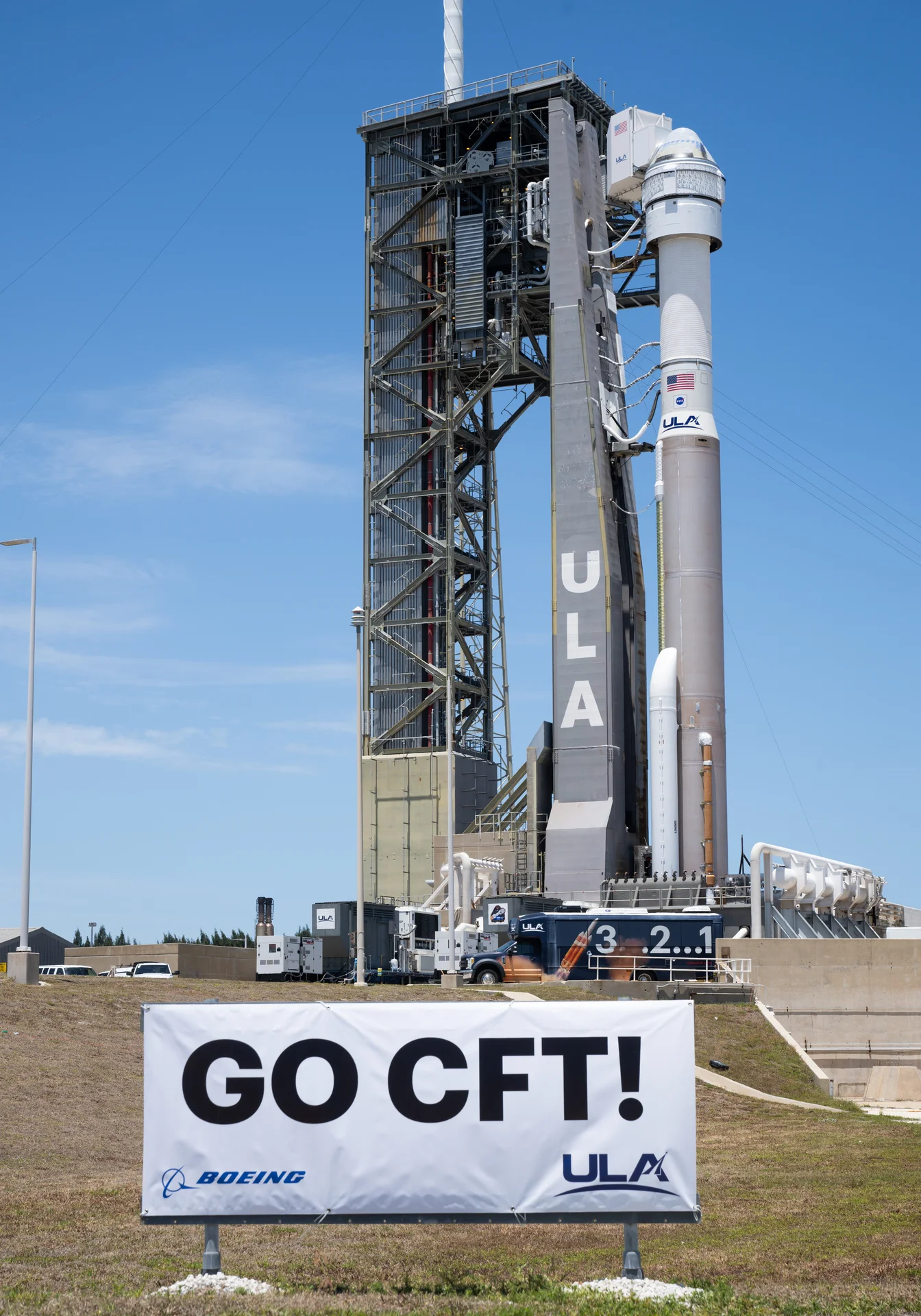
NASA Is Lining Up More Starliner Flights as Dragon’s Horizon Shrinks
Mid-September reporting: NASA preparing more Boeing Starliner crewed missions, thruster-fix support, and a path off retiring Atlas V — because one crew ride is not enough into the 2030s.
Commercial Crew was sold as two U.S. rides to orbit. For years, only Crew Dragon has carried that load. Mid-September reporting says NASA is now moving to keep Boeing’s Starliner in the game — not because the capsule’s record is clean, but because the agency cannot bet LEO access on one vehicle into the 2030s.
So basically: sources tell Ars Technica NASA will order two more Starliner crewed missions, help pay for thruster fixes, and support certifying Starliner on a new rocket as Atlas V retires — while WSJ/Reuters describe broader talks that could run to 10 or more flights. Formal announcements are still pending.
What reporters say NASA is doing
On Sept. 17, Ars Technica’s Eric Berger reported that multiple sources expect NASA, as early as the following week, to:
- Order two additional crewed Starliner missions from Boeing
- Put some NASA money toward fixing the propulsion problems seen on recent flights
- Help certify Starliner on a successor launch vehicle once Atlas V is gone
A day later, Reuters summarized a Wall Street Journal report that NASA and Boeing are discussing Starliner handling 10 or more new flights in the years ahead. Those two numbers are not the same story beat — treat the “two missions” line as the near-term Ars sourcing, and the “10+” figure as a separate WSJ framing of longer talks. NASA told WSJ it is developing plans for sustained LEO presence and expects to release details soon; Boeing told Reuters it remains committed to commercial crew.
Why the urgency is real
SpaceX has signaled it intends to wind down Crew Dragon around 2030 as it pushes Starship and other businesses. On the All-In Podcast this week, SpaceX COO Gwynne Shotwell would not commit to flying Dragon “for some time,” and pointed at Boeing: the other provider should fly the capsule the government already paid for. Ars notes NASA development/certification spend of roughly $3.1 billion for SpaceX and $5.1 billion for Boeing since 2010; Dragon has flown 13 crewed ISS missions for NASA with another due in October.
Separately on Sept. 18, Reuters reported NASA awarded SpaceX about $946 million for three more astronaut ISS missions, extending Dragon flying through 2030. That buys calendar — it does not erase the succession problem.
Atlas V is almost out of the picture
Starliner still rides ULA Atlas V. Production has ended; as of mid-2026 reporting, six Atlas Vs remain, all slated for Starliner (one for the uncrewed Starliner-1 return-to-flight path, then crewed missions). Extra missions beyond that inventory need a new certified rocket. Ars expects the competition to land between ULA’s Vulcan and Blue Origin’s New Glenn. Human-rating either one is its own program of work.
The hard history stays on the page
Starliner’s 2019 and 2022 uncrewed tests had serious problems. The June 2024 crewed flight’s thruster issues became a NASA Type A mishap; Butch Wilmore and Suni Williams came home on Dragon. Boeing has taken more than $2 billion in charges on the fixed-price program. Administrator Jared Isaacman has publicly blamed both hardware and decision-making culture. Ordering more flights does not erase that record — it is NASA choosing dual-provider redundancy anyway.
Progress and limits
Progress: NASA appears unwilling to enter the post-ISS / commercial-station era with a single crew taxi. Limits: thrusters still need fixing; Starliner-1 and crewed return-to-flight still have to succeed; Atlas V inventory is finite; new-rocket certification is not free or fast; dollar amounts for NASA’s thruster help are not public yet. Watch the formal contract language, which rocket wins the second seat, and whether “two more” missions and “10+” talks converge into one published buy.
So basically — pass it on.