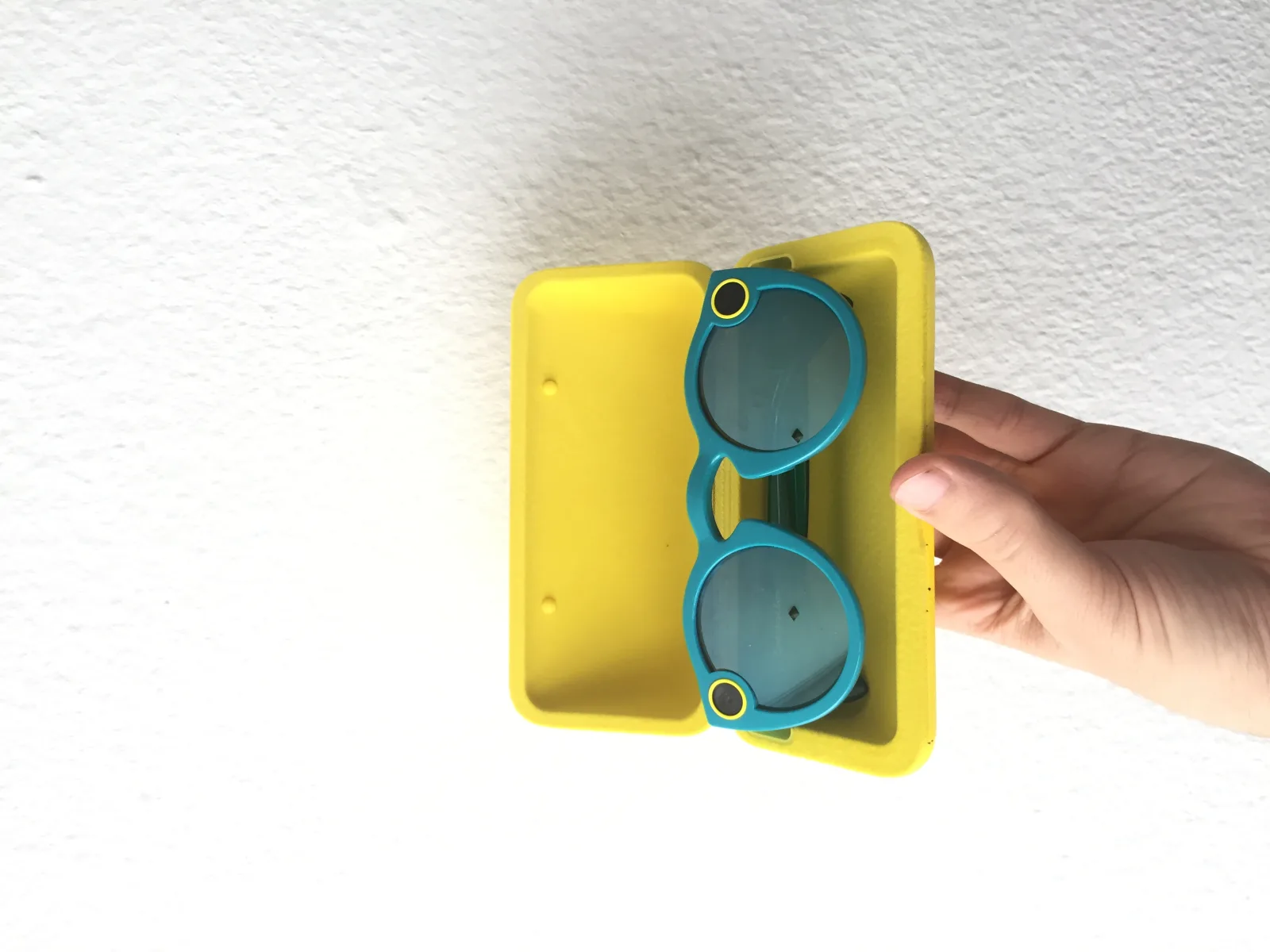
Snap’s $2,200 Augmented Reality Glasses Try Round Two
Specs glasses got a rough launch. Mid-September Snap added Specs Intelligence, Verizon cellular cases, and enterprise demos — still about $2,195, still a bet that glasses beat phones.
Snap’s Specs augmented reality glasses had a rough debut. Critics called them heavy and expensive. The stock took a hit. In mid-September Snap came back with a clearer pitch: these are meant to be a computer you wear, not just another camera on your face.
So basically: On Sept. 16, 2026, at an event in Los Angeles, Snap pushed Specs again — Specs Intelligence (AI that works across the glasses, iPhone, and Mac), entertainment apps like HBO Max and Spotify, enterprise demos, and a Verizon cellular charging case so the glasses aren’t stuck on Wi‑Fi. Preorder is $2,195. The connected-case bundle is $2,395, plus a data plan starting at $10 a month for Verizon customers ($20 for non-Verizon). Shipping is aimed at fall in the US, UK, and France.
Round one vs. round two
Specs first showed up earlier in 2026 — Tom’s Guide dates the initial reveal to June, when CEO Evan Spiegel called them the start of a “new era of computing.” The early reaction was harsh: price, weight, and looks dominated the conversation more than day-to-day jobs. TechCrunch’s Sept. 16 write-up framed the LA event as Snap’s second try at explaining why a $2,200 wearable deserves to exist.
This week’s message was integration. Spiegel and other executives demoed features meant to put Specs inside ordinary digital life — streaming, music, navigation overlays, shared AR — instead of treating the glasses as a standalone stunt device.
Hardware, price, and where they ship
Tom’s Guide published the hardware sheet Snap is selling against: standalone AR glasses in Swiss TR90 polymer, about 132 grams (47mm) and 136 grams (52mm), proprietary waveguide displays with a 51-degree field of view and support for 16 million colors, electrochromic lenses (about a 10-second transition to tinted) with prescription support, dual Snapdragon processors (one for computer vision, one for AR Lenses), hand tracking and spatial mapping with roughly 7ms response, about 4 hours of mixed-use battery, and up to about 20 hours with the case.
Preorders run through specs.com at $2,195 with a $200 refundable deposit, per Tom’s Guide. Verizon’s Sept. 16 release puts the Connected Case bundle at $2,395, with Connected Wearables data plans from $10/month for Verizon customers and $20/month for everyone else, plus optional 36-month financing for eligible buyers. Verizon is the exclusive U.S. cellular partner for the case. Specs are also set for verizon.com, the My Verizon app, and select Verizon stores.
Snap expects to ship in the US, UK, and France starting this fall. There’s a Specs pop-up at Westfield Century City in Los Angeles starting Oct. 1 before wider shipping.
Specs Intelligence and the “wearable computer” pitch
The headline software move is Specs Intelligence — Snap’s “anticipatory AI” layer. TechCrunch reported Spiegel describing it as an “AI native operating system with intelligence designed around your projects,” meant to connect goals, priorities, relationships, and routines across apps you choose to link, including on iPhone and Mac. In practice, reviewers noted it can work as a productivity AI even without the glasses — Specs are the hard sell; the cross-device AI is the soft start.
On-device jobs Snap is pushing: live translation in your line of sight, contextual navigation, spatial timers and measurements, hands-free calling and Bluetooth audio, a large private virtual display, and shared AR through Connected Lenses. Verizon’s release leans on that same list — heads-up translation, navigation, shared AR, virtual display — as the reason to put 5G in the charging case instead of tethering everything to a phone’s Wi‑Fi.
Snap also said Specs do not use facial recognition to identify people, do not continuously record the world to “understand” it, and don’t continuously save audio, video, or photos — and that an LED shows when recording. Privacy is still a trust problem for any camera glasses; Snap is at least naming the failure modes it wants to avoid.
Enterprise may pay the bill first
Consumer hype is loud. Company cards may matter more. Snap announced Specs for Enterprise, with partners including Amazon, Salesforce, and Nvidia. Spiegel talked up mobile device management, security controls, and ways to deploy and manage stacks across teams. Demo footage leaned toward technicians repairing hardware with overlays — the kind of job where a $2,000 pair of glasses can be an IT line item instead of a fashion purchase.
There were lighter demos too — including an NBA/WNBA Lens for practicing a basketball shot. Fun for a stage. Unclear as a reason to buy.
Spiegel’s framing stayed consistent with the “new computer” line: computers should make people more capable, not push them into a headset world or make them irrelevant. Whether buyers accept a face-worn computer at this price is still the open question.
What to watch
Wearables only stick if they make an ordinary day easier. Specs still have to feel manageable on the face, stay useful after the demo, and not look like a costume in public. Putting cellular in the case is an honest fix: untethered AR was always a network and battery problem as much as a display problem. Specs Intelligence on iOS and Mac can win users before the glasses do.
The real tests: do enterprise pilots with Amazon, Salesforce, Nvidia, and others turn into managed deployments? Does fall shipping hit the US, UK, and France on schedule? And does anyone outside a demo room wear $2,195 glasses long enough for the software story to matter?
So basically — pass it on.