Space Robots Only Get 20 Seconds of Fake Zero-G to Prove It
Icarus flew its ISS-bound free-flyer on parabolic flights in Canada — ~22 minutes of microgravity total. Practice is the bottleneck, and the U.S. barely has the planes.
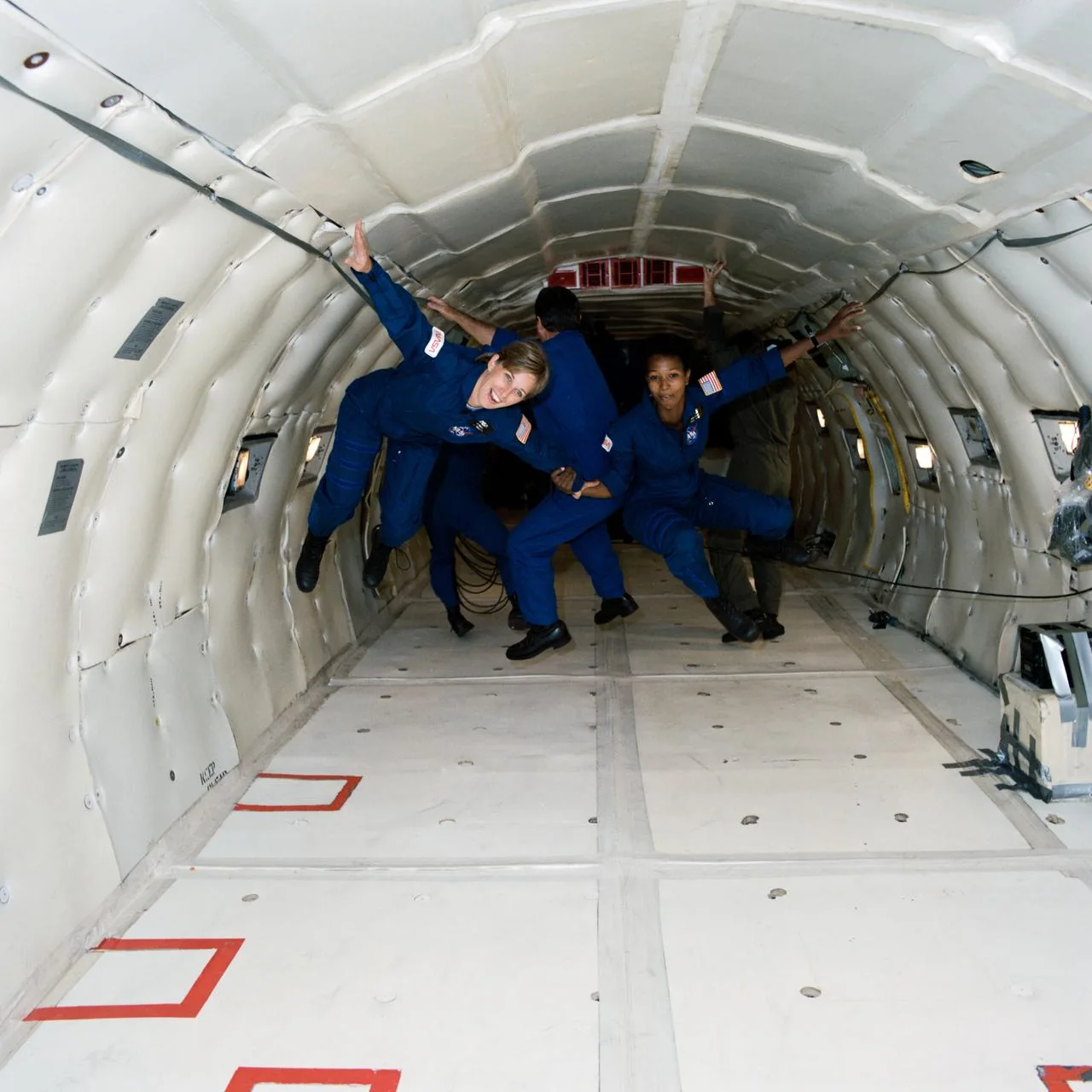
Before a robot can tidy the International Space Station, it has to survive something weirder than orbit: roughly twenty seconds of weightlessness at a time. Icarus Robotics, a Brooklyn startup, announced this week that its free-flying robot Joy completed a Canadian parabolic campaign — the last major microgravity stress test before flight hardware heads toward NASA.
So basically: space humanoids (and free-flyers with arms) don’t prove themselves in glossy renders. They prove themselves in short zero-G bursts, and right now American companies often have to leave the country to get those bursts.
What Joy is for
Joy is built to move through the pressurized ISS and handle cargo and logistics work that eats astronaut time. Arms with seven degrees of freedom, pinch grippers, onboard compute closer to modern terrestrial robots than older station free-flyers. The near-term plan is teleoperation first, with autonomy layered on as orbital data accumulates.
SpaceNews dated the company announcement September 17: four parabolic flights totaling about 22 minutes of microgravity operations, validating flight control, sensors, and manipulation. The Robot Report adds the campaign ran Sept. 9–11 across 66 parabolas. Icarus says handover to NASA is targeted for January 2027, with a 2027 station demonstration under a mission-management setup with Voyager Technologies.
Why parabolic flights matter
Simulators lie about contact dynamics. Parabolic flight is still the cheapest way to feel real microgravity without buying a launch. Icarus isolated manipulation, state estimation, and flight control across flights. The arms — built in-house — were a highlighted unknown; the team ran controllers and trajectories and disturbed the arms to see recovery.
Flight control was ironically harder in the airplane than it may be on station: settling into each parabola, catching and releasing the robot, dealing with G variance. Conservative runs now; more aggressive campaigns later.
The quiet infrastructure punchline
Icarus flew in Canada because no U.S.-based operator is currently offering parabolic flights — SpaceNews notes Zero-G is paused, and other commercial-station players are making similar overseas plans. Launch capacity is booming. The domestic capacity to validate the robots that will live inside next-gen stations has not kept pace.
That’s a different story from ground stations and debris policy — and a different story from kitchen humanoids. This is about logistics labor in shirtsleeve volume, where “humanoid” means dexterous mobile machines that free crew for science, not dinner.
The grounded take
Treat Joyride-1 timelines as schedule-dependent on NASA, because they are. Watch for three signals instead of launch-day hype: clean hardware handover, early teleop task hours on station, and whether autonomy claims stay honest about how much is still human-driven.
Twenty-second bursts are an undignified origin story for orbital labor. They’re also how you find out your gripper doesn’t fight you before the crate leaves Earth.
So basically — pass it on.