Star Catcher Is in Orbit to Try Beaming Power Between Two Satellites
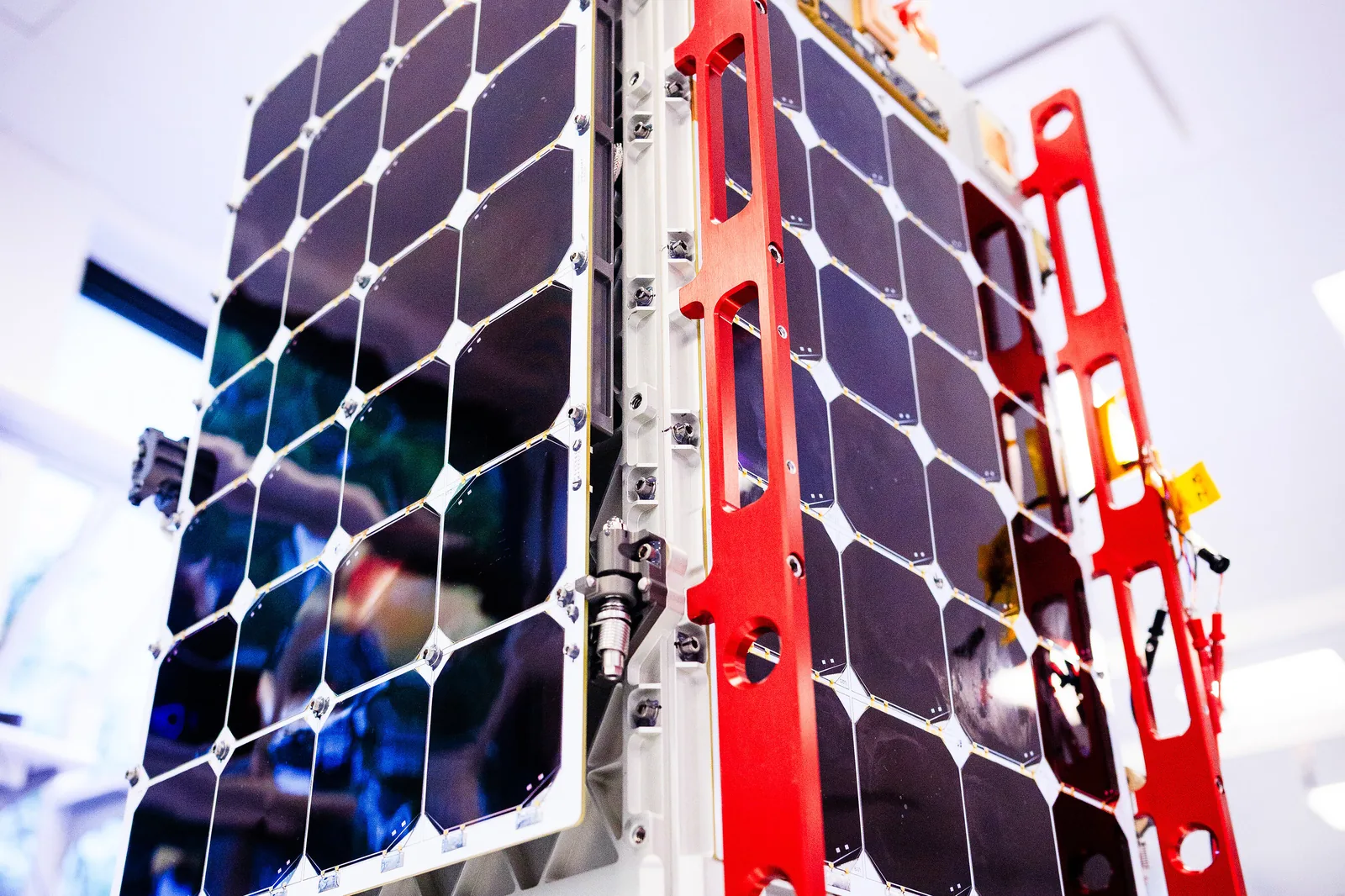
Star Catcher's Protostar launched Oct. 1 on SpaceX's Transporter-18. Over the next few months it will release a CubeSat and try to beam power with light onto its solar panels, which Star Catcher says would be a first.
So basically: A Florida startup called Star Catcher put a satellite named Protostar into orbit on Thursday, Oct. 1, and over the next few months it will try something nobody has done: beam power with light from one free-flying spacecraft to another.
The launch
Protostar rode SpaceX’s Transporter-18 rideshare out of Vandenberg Space Force Base in California. Star Catcher posted on LinkedIn that separation from the rocket was confirmed.
The company says the rest happens “over the next few months.” As of Tuesday morning, Oct. 6, it hasn’t announced a beaming result.
The test
This is the first time Star Catcher flies its whole system in space: collect sunlight, find and track a target, then send power to it.
Protostar will release a CubeSat, track it, and beam measurable power onto the CubeSat’s regular, off-the-shelf solar panels. CEO Andrew Rush told Wired that part of the test is measuring how much power arrives as the CubeSat drifts away, then checking that against the company’s models.
If it works, Star Catcher says it will be the first optical power beamed between two free-flying spacecraft. Both are moving at roughly 27,000 km/h.
How it’s supposed to work
Satellites run on their own solar panels and batteries, and both are limited by weight. Star Catcher wants to put “power nodes” in orbit. They gather sunlight with an array of lenses, turn it into a beam tuned to wavelengths that normal solar panels convert well, and point it at customer satellites.
The company says that could let a satellite make two to ten times more power with no hardware changes. Older satellites with worn-out panels could keep working longer. New ones could launch with smaller panels and batteries.
What it’s done so far
Star Catcher was founded in 2024 and is based in Jacksonville. Last November it beamed more than 1.1 kilowatts onto commercial solar panels at NASA’s Kennedy Space Center, which it calls a world record for optical power beaming. Late in 2025, a mission called Sextant Alpha tested its satellite tracking software in orbit.
The money
It has raised $88 million in venture funding, including a $65 million Series A in May. It also has a $60 million STRATFI award from the U.S. Space Force.
It has announced 10 power purchase agreements, with customers including Starcloud, Loft Orbital, Astro Digital, and Aethero, plus more than 40 letters of intent.
A follow-up satellite meant to beam “operational levels” of power is already in development. Payload reports the team wants a working grid in orbit by the end of the decade.
Why now
AI computing in space needs a lot of power. The same Transporter-18 launch carried Google’s first Project Suncatcher satellite, which has four TPUs and has to power down every 15 to 20 minutes to avoid overheating. It also carried Cowboy Space’s Reason-1, which plans to try beaming 30 to 100 watts to the ground by laser as soon as late October. The Pentagon’s Defense Innovation Unit also asked for power beaming prototypes in July.
What it is not
It’s not a power grid yet. A Max Planck Institute researcher told Wired that precise tracking, heat, and lasting for years in space are still big challenges. And the ground record is still far below what a large commercial satellite needs.
My take
This is the right size of test: one small node, one CubeSat, and a modest goal. If the numbers line up with the models, Star Catcher has a real shot at selling power in orbit, and it already has paying customers waiting. If they don’t, it’s back to the lab. Power is quickly becoming the main limit on everything people want to do up there, from AI chips to factories, so a small test like this matters more than its size.
So basically — pass it on.