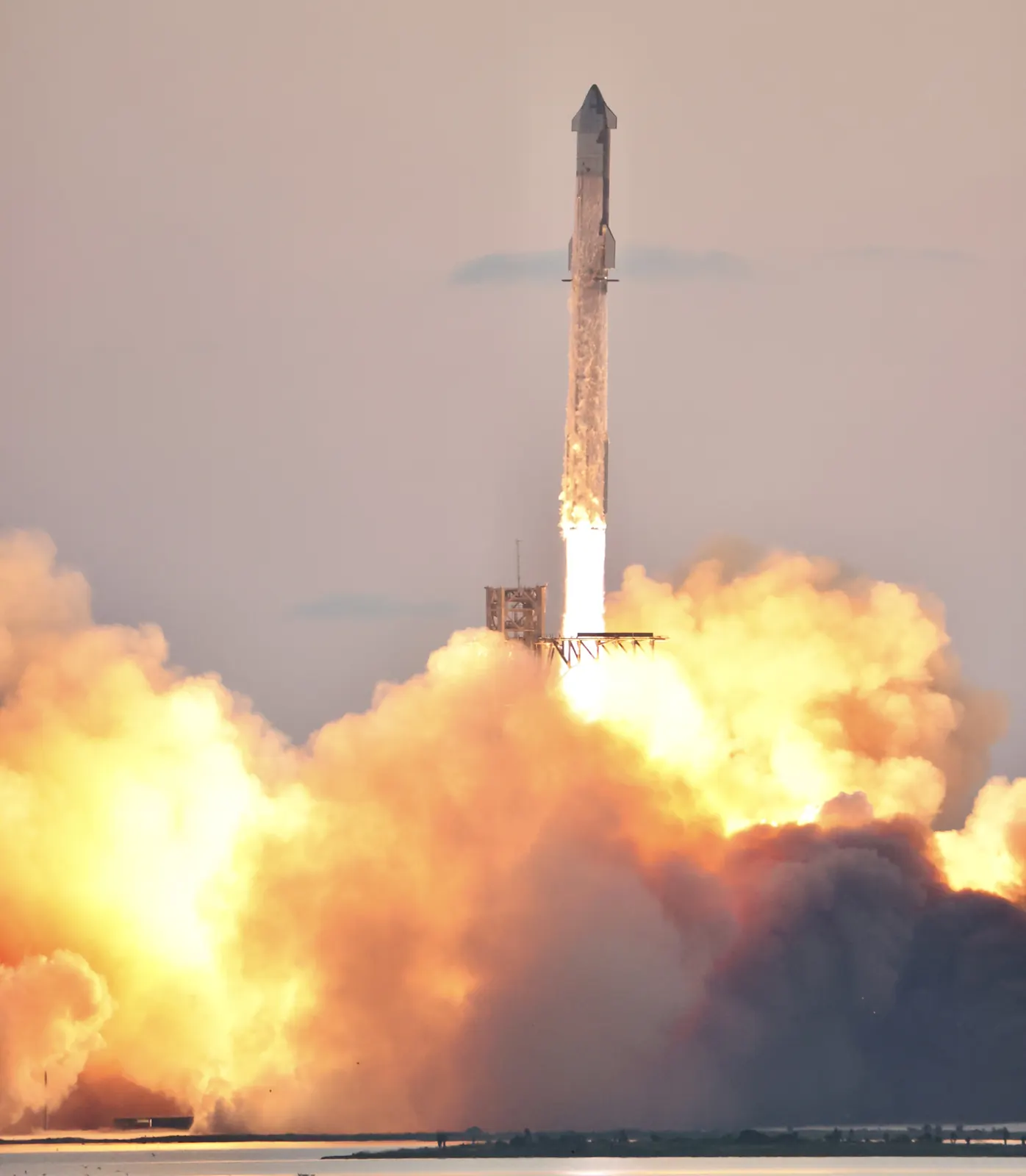
Starship Reached Orbit on Monday, Then Came Home Early
Flight 14 put Starship in orbit for the first time on Sept. 28, deployed 26 Starlink V3 satellites, and splashed down north of Hawaii a little over three hours after liftoff.
So basically: Starship reached orbit for the first time on Monday. It dropped off 26 Starlink satellites, then came down in the Pacific a little over three hours later, well short of the 10 hour plan.
The launch
SpaceX launched Flight 14 from Pad 2 at Starbase in South Texas at 8:48 a.m. ET on Sept. 28. The 13 flights before this one were suborbital. None of them stayed up.
One of the six Raptor engines on the Ship shut down early on the way up. For a few minutes it looked like the orbit attempt was off. SpaceX commentator Dan Huot said on the livestream that the team was not giving up yet. Controllers checked the rocket and went ahead. A short burn from a single Raptor put Ship into orbit.
The Super Heavy booster turned around and splashed down in the Gulf of Mexico, off the Texas coast.
The satellites
Ship then released 26 Starlink V3 satellites. Spaceflight Now called this the first time Starship has put operational satellites into low Earth orbit. On an earlier flight, Starship released V3 satellites on a path that brought them right back down. These ones stayed up.
The short flight
The plan was about six laps and close to 10 hours, ending off Chile. Controllers cut that short. Ship started coming back down a bit under three hours after liftoff and splashed down in the Pacific, north of Hawaii. Space.com timed the splashdown at three hours and eight minutes after launch. The ship hit the water, then tipped over and exploded. Ocean splashdowns have ended that way before.
My take
Getting to orbit was the step this rocket had not done. It did it, and it put real satellites up while doing it. The early engine shutdown and the shortened flight are the parts that still need answers. Catching the ship at the tower, and refueling one in orbit, are still ahead. Monday was the first orbit, not a finished rocket.
So basically — pass it on.