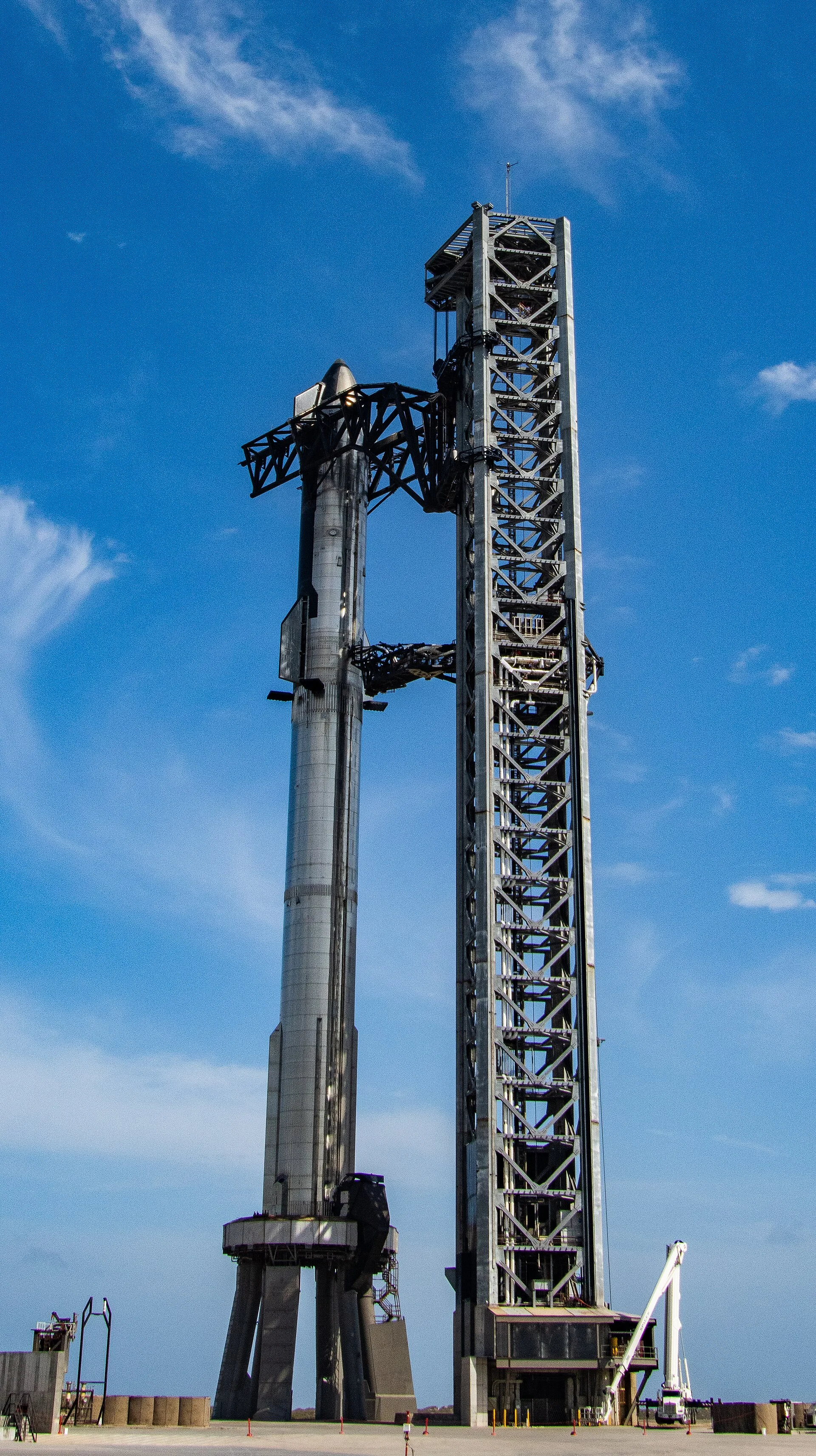
Starship Flight 14 Slipped to Sept. 28. The Gate Is Still the FAA.
SpaceX retargeted its first orbital Starship attempt to as early as Monday, Sept. 28 — still pending regulatory approval. What that phrase means in the week before the window.
On Sept. 15, SpaceX told the public Flight 14 was aiming for as early as Tuesday, Sept. 22, pending regulatory approval. Two days later it moved the earliest date to Monday, Sept. 28 — same three words at the end.
So basically: the interesting story this week is not the orbit profile. It is what “pending regulatory approval” actually does to a countdown when the hardware is already stacked in Texas.
What changed on Sept. 17
SpaceX’s own X account put the new target in one sentence: targeting Starship Flight 14 as early as Monday, September 28, pending regulatory approval. It quoted the earlier Sept. 22 note. No technical scrub reason. No new T-0 clock. Just a six-day slip with the same regulatory gate still attached.
That matters because public NET dates and FAA airspace notices are not the same thing as a license that says “you may fly this profile.” The FAA’s recent airspace advisory work had been tracking Sept. 22 as primary and Sept. 23 as backup for Starbase. Those notices plan national airspace around a possible attempt. They are planning tools, not a locked green light. Thursday’s update quietly told everyone the earlier window paperwork was already out of date.
What “pending FAA” means in practice
Commercial Starship flights from Boca Chica run under a vehicle operator license from the FAA Office of Commercial Space Transportation. For a new trajectory, payload, or contingency landing geography, SpaceX typically needs a license modification, not just a weather call. The agency’s evaluation covers public safety (overflight, debris, payload), national security and foreign policy screens, insurance, and environmental review under NEPA-style processes.
In early September the FAA published a Final Tiered EA and FONSI/ROD covering Starship reentry contingency operations in the Pacific and an additional landing trajectory — the kind of environmental paperwork that has to finish before certain license modifications stick. That document is not the same as a press conference saying Flight 14 is cleared for Monday. It is one piece of the stack. Public stakeholders can see progress on the environmental side without knowing whether the specific Flight 14 authorization has issued.
Until SpaceX or the FAA says the license modification for this attempt is in hand, every date on the mission page is conditional. Weather and Raptors can scrub a pad. Paperwork can scrub a whole week without a spectacular failure video.
Why this week’s clock is different from a suborbital scrub
Prior Starship flights flew passively safe suborbital arcs. Flight 14’s published package is the first planned orbital insertion: Ship around 275 km, roughly six orbits, about 10 hours, then a deorbit burn and Pacific splashdown west of Chile, with 26 Starlink V3 satellites as the payload. That profile changes what regulators have to sign off on — insertion confidence, deorbit assurance, satellite deploy rules, and downrange contingency areas.
So the “pending” phrase is doing heavier work than it did for a short hop. If the license is late, you do not nudge T-0 by an hour. You move the earliest public date, which is exactly what happened between Sept. 15 and Sept. 17.
Next Spaceflight and other trackers will update windows as FAA notices and SpaceX language shift. Treat those as secondary to the company’s own mission page and the FAA Starbase stakeholder page. Secondary sites are useful for range calendars; they are not the regulator.
What to watch between now and Sept. 28
From Monday, Sept. 21 through the new earliest attempt date, the useful signals are boring:
- Does SpaceX drop the “pending regulatory approval” clause, or keep it next to every date?
- Do new FAA airspace / NOTAM packages appear for the Sept. 28 window (and backups)?
- Does the Flight 14 mission page change trajectory or payload language, or only the date line?
- Is there any public note that the license modification for this attempt has been granted?
Hardware photos from Starbase will keep circulating. They are not a license.
The filter
A six-day slip with no engine failure story is often read as drama. It is usually bureaucracy and range coordination showing up on the calendar. Flight 14 still aims at a first orbit and a Starlink V3 load — that product angle is real. The near-term question for this week is narrower: whether the FAA package that makes Monday legal arrives before Monday does.
Watch the approval language, not the stack selfie.
So basically — pass it on.