Eight Robots in Greece Check 100,000 Peaches an Hour for Pits
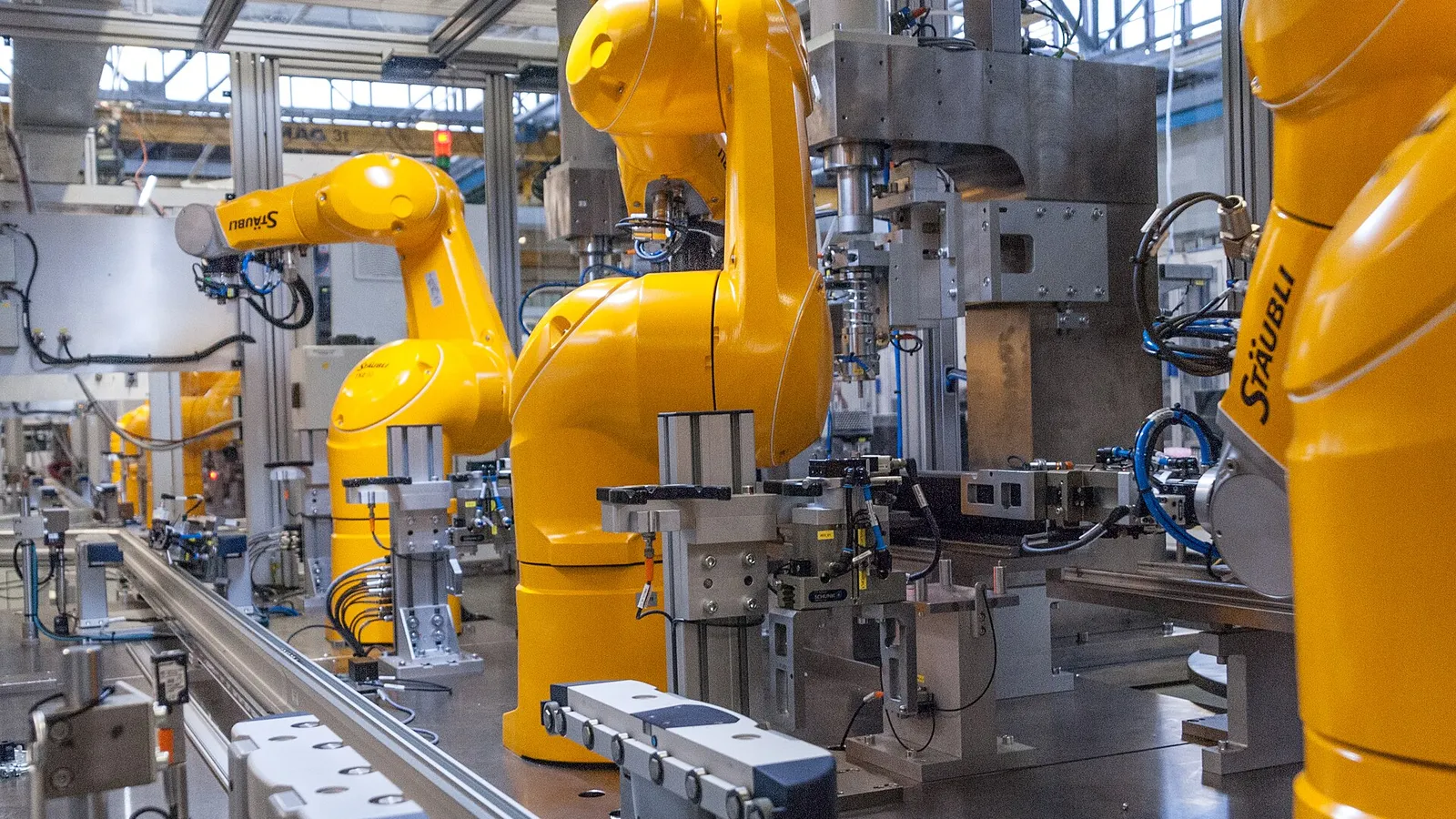
At the Agrophoenix fruit plant in northern Greece, eight Stäubli SCARA robots running QING's camera system inspect about 15 tons of peach halves an hour and pull out the ones with pit fragments. The setup just finished its first full harvest season.
So basically: A fruit plant in Greece now uses eight fast robot arms with cameras to check peach halves for leftover pits. Together they handle about 15 tons of peaches an hour, roughly 100,000 peaches. Each robot grabs a bad half about once a second and pulls it off the line.
Where this is
The plant belongs to Agrophoenix, a fruit processor founded in 2018 in Greece’s Imathia region. That area is one of Europe’s big peach growing zones.
Agrophoenix makes things like diced fruit, fruit cups, and fruit in pouches. For all of that, one thing really matters: nobody wants to bite into a pit.
How the line works
Before the robots ever see a peach, a lot has already happened.
- The peaches are washed
- They are steam peeled
- They are cut in half
- The pits are removed by machine
- A first camera system checks them, mostly for color
But pitting machines are not perfect. Sometimes a chunk of pit stays stuck in the fruit. That is what the robots hunt for.
Inside each robot cell
The peach halves split onto eight separate conveyors. Each one runs through a compact cell with a camera and a robot arm hanging overhead.
- The camera looks at every single peach half
- AI software decides in milliseconds whether it is good or bad
- If it is bad, the robot picks it up and drops it on a side belt
- Good halves just keep rolling through
The robots are Stäubli TS2-80 SCARA arms. SCARA robots are built for fast, flat, pick and place moves, which is exactly this job.
The vision system is called STAQ. It was built by QING, a startup in Arnhem, the Netherlands. STAQ stands for “See, Think, Act.”
The numbers
Here is how the plant does the math:
- A peach weighs about 150 grams
- 15 tons an hour works out to about 100,000 peaches
- That is about 200,000 halves an hour
- Roughly 3,600 halves get rejected in that time
Each robot can pick one peach half per second. That works because most halves are already fine. The robots only grab the bad ones.
Rejected halves get sorted into two groups. Ones with big pit pieces go to an automatic re-pitting machine. Ones with small pieces go to people for a hand check. Then both go back through the robot cells.
The hard part was not the AI
This took two seasons to get right. The holdup was not the software or the robots.
It was the grip.
Peeled peaches are slippery. The team had to find a conveyor surface where the halves would not slide around. Then they had to find a vacuum gripper and contact material that could grab a wet, upside down peach half and let it go cleanly every time.
Built for a messy job
Food plants are wet and sticky, and they get cleaned constantly.
At Agrophoenix, the lines stop every four hours for a 20 minute automatic cleaning. Every Sunday there is a deeper clean with food grade detergent.
So the robots are the washdown version. The joints are sealed, the materials resist corrosion, and internal pressure keeps steam and water out. They even use food safe oil, since they hang right over the fruit.
What is next
The system just finished its first full harvest season.
The next goal is harder. Agrophoenix and QING want a robot that can actually cut out the pit fragments, instead of just pulling the bad halves for someone else to fix.
My take
This is my favorite kind of robot story. No humanoid, no hype. Just a robot doing one dull job very fast.
I also love that the hardest problem was a slippery peach. That is real robotics. The software gets the headlines, but grabbing things is still where projects get stuck.
One caveat: this comes from a single industry write up, not independent reporting. But the numbers are specific, and the next step, cutting out the pits, would be a real leap if they pull it off.
So basically — pass it on.