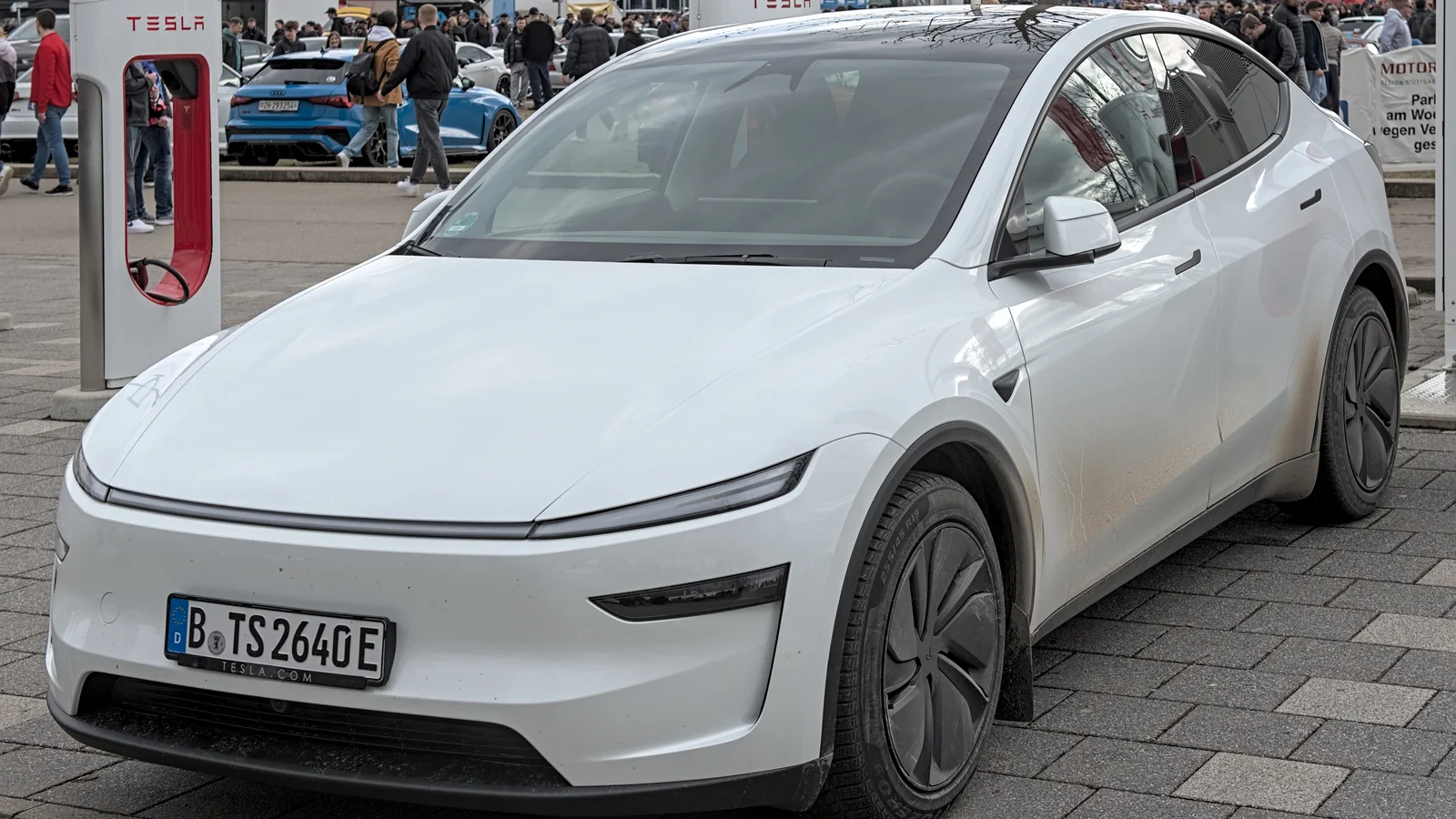
Tesla Just Dropped the 'Full Self-Driving' Name in Europe
Tesla's European websites now call FSD 'Tesla Assisted Driving,' after Germany said the old name was misleading. In return, Berlin is backing Tesla's push for EU-wide approval, which now needs a vote that slipped to December at the earliest.
So basically: In Europe, Tesla’s “Full Self-Driving” is not called that anymore. Tesla’s European websites now sell it as “Tesla Assisted Driving.” Germany said the old name was misleading, Tesla offered a new one, and in return Germany is backing Tesla’s push to get the software approved across the whole EU.
What changed
As of Thursday, Oct. 9, Tesla’s FSD pages in Germany, Spain, the Netherlands, Slovakia, and other European countries redirect to a new “Tesla Assisted Driving” page, according to Reuters.
The U.S. site did not change. Here it is still “Full Self-Driving (Supervised),” for $99 a month.
Electrek noticed that the new German page is mostly a translation of the U.S. one with the name swapped out. It still says the car can drive you “almost anywhere” under your supervision. It still has a section called “The future is autonomous” that promotes Robotaxi and Cybercab.
Why Germany pushed
On Oct. 6, Germany’s Transport Ministry put out a statement saying the old name was misleading. Its reasoning was simple. The system does not take over the full driving task. The driver has to pay attention the whole time and is still fully responsible for the car.
The ministry said Tesla offered the “Tesla Assisted Driving” name during talks with Transport Minister Steffen Bilger in September.
Germany is not the only one with this complaint:
- Sweden: consumer protection officials asked the Swedish Transport Agency to look at whether FSD marketing made buyers think the car could fully drive itself
- Italy: officials wrote in internal government messages, seen by Reuters, that the name could make users believe the car had higher levels of automation than it does
The speed deal
There was a second part to the agreement, and it might matter more than the name.
Germany says the system should be allowed to go up to 10% over the speed limit, and it will push for that in the EU process. According to Reuters, as cited by Electrek, the version approved in the Netherlands allows speeds up to 50% over the detected limit. So Tesla will likely have to tighten that up.
In return, Bilger says he wants Tesla drivers to be able to use the system across the EU as fast as possible. Musk thanked Germany on X with a “Danke schoen.”
Where FSD is allowed in Europe
Right now the system is approved in eight EU countries:
- The Netherlands
- Lithuania
- Estonia
- Denmark
- Belgium
- Slovenia
- Czechia
- Croatia
Slovakia is expected to become the ninth within days. The big markets like Germany, France, Italy, and Spain are not on the list yet.
To go EU-wide, Tesla needs a vote. That vote was supposed to happen in October and has now slipped to December at the earliest. It needs 15 of the 27 member states, representing 65% of the EU’s population. France is running more tests, and both France and Sweden have raised concerns about speeding.
Why it matters
Musk has called self-driving key to Tesla’s future. Europe is a huge market, and right now most European Tesla owners still cannot use the software at all.
Getting Germany on board is a big deal. It is the EU’s biggest country, and its vote counts a lot toward that 65% population rule. A name change is a cheap price for that kind of support.
It also raises an obvious question. If “Assisted Driving” is the honest name in Berlin, why is it still “Full Self-Driving” in California? Electrek pointed out that a California judge already called the name “unambiguously false and counterfactual” last December.
My take
I think this was a smart trade by Tesla. Changing a name costs basically nothing. Getting Germany in your corner for an EU vote is worth a lot.
Honestly, “Assisted Driving” is just more accurate for what it does today. You still have to watch the road. The robotaxi stuff is where “self-driving” actually fits.
The part I would watch is the speed limit. Owners love setting it a little fast. If the EU version caps it at 10% over, that is a real change in how it drives, not just a new label.
So basically — pass it on.