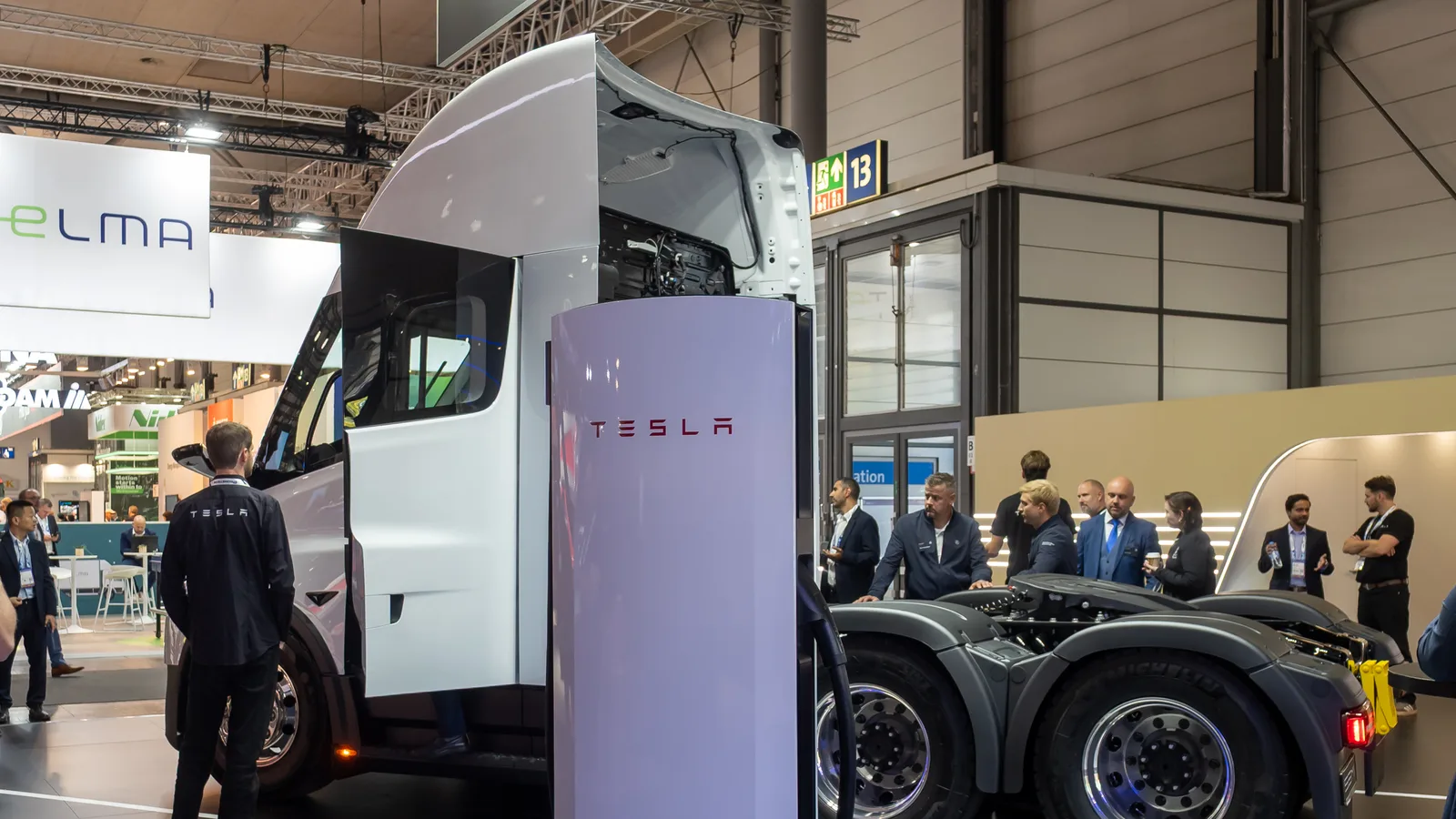
Tesla Semi Just Got Its First Charging Corridor Outside California
Tesla opened Semi Megacharger stations near Atlanta and Savannah, 220 miles apart, including the first one at a Pilot truck stop. A 325 mile Semi can now run the Savannah port to Atlanta lane and back on electricity.
So basically: The Tesla Semi just got a real highway to drive on outside California. Tesla opened two Megacharger stations in Georgia, one just south of Atlanta and one outside Savannah. They are about 220 miles apart. That means an electric semi can now haul freight from one of the busiest ports in the country to Atlanta and back without a drop of diesel.
What opened
Tesla’s Semi account posted the news on X on Thursday, Oct. 8, with a map of the route and a promise that “many more Southeast sites” are coming.
Here are the two stations, from Electrek:
- Conley, Georgia: about 10 miles south of downtown Atlanta near I-285 and I-675. 8 stalls
- Ellabell, Georgia: about 20 miles west of Savannah on I-16, at a Pilot truck stop. 6 stalls
That is 14 stalls total. Each one is rated for up to 1.2 megawatts. For comparison, a fast Supercharger for a Model 3 tops out around a quarter of that.
Why this route matters
Savannah has one of the busiest container ports in the U.S. A huge amount of what comes off those ships rides a truck to Atlanta.
Now the math works for an electric truck:
- The Standard Range Semi is rated for 325 miles fully loaded at 82,000 pounds
- The Long Range is rated for 500 miles
- A Megacharger can put back up to 60 percent of that range in 30 minutes
So a Standard Range truck can leave the port area, drive to Atlanta, charge during the driver’s break, and drive back. Without chargers at both ends, that 440 mile round trip was out of reach.
Electrek called it the Semi’s first public charging corridor outside California.
The Pilot part
The Savannah site is the first Megacharger at a Pilot truck stop. Pilot and Tesla announced their partnership in January, and the first sites were supposed to open this summer. So this is a season late.
But more are right behind it. Pilot says the next ones are:
- A Flying J in Tulare, California
- A Flying J in Fort Stockton, Texas
- A Pilot in North Las Vegas, Nevada
Nine more are under construction, each with four to eight stalls.
Where the network really stands
Here is the honest part. Tesla is way behind its own plan.
Counting Ellabell, there are four customer facing Megacharger sites with 26 stalls. Tesla’s own report from late 2025 showed about 37 sites planned for 2026. It has said it wants 46 by early 2027.
So four sites in mid October is not great.
But the trucks are coming fast. Tesla started volume Semi production at its Nevada factory a couple of weeks ago, a plant built for 50,000 trucks a year. Right before that, Tesla was named primary supplier on an order for 2,500 trucks.
Trucks without chargers do not go anywhere. That is why this corridor matters more than the stall count.
My take
I love this kind of boring, real progress.
Everyone talks about whether electric semis “work.” This is how you find out. Pick one busy freight lane, put big chargers at both ends, and let fleets run it every day.
Savannah to Atlanta is a perfect test. It is short enough for the cheaper truck, busy enough to matter, and full of companies that would love to stop buying diesel.
Electrek also noticed a fun twist. Ellabell is home to Hyundai’s Metaplant, which moves parts with hydrogen trucks. Tesla just put megawatt charging in the same town.
Tesla is late on chargers. But the first real corridor is open, and the factory is running. Now we see how fast the rest fills in.
So basically — pass it on.