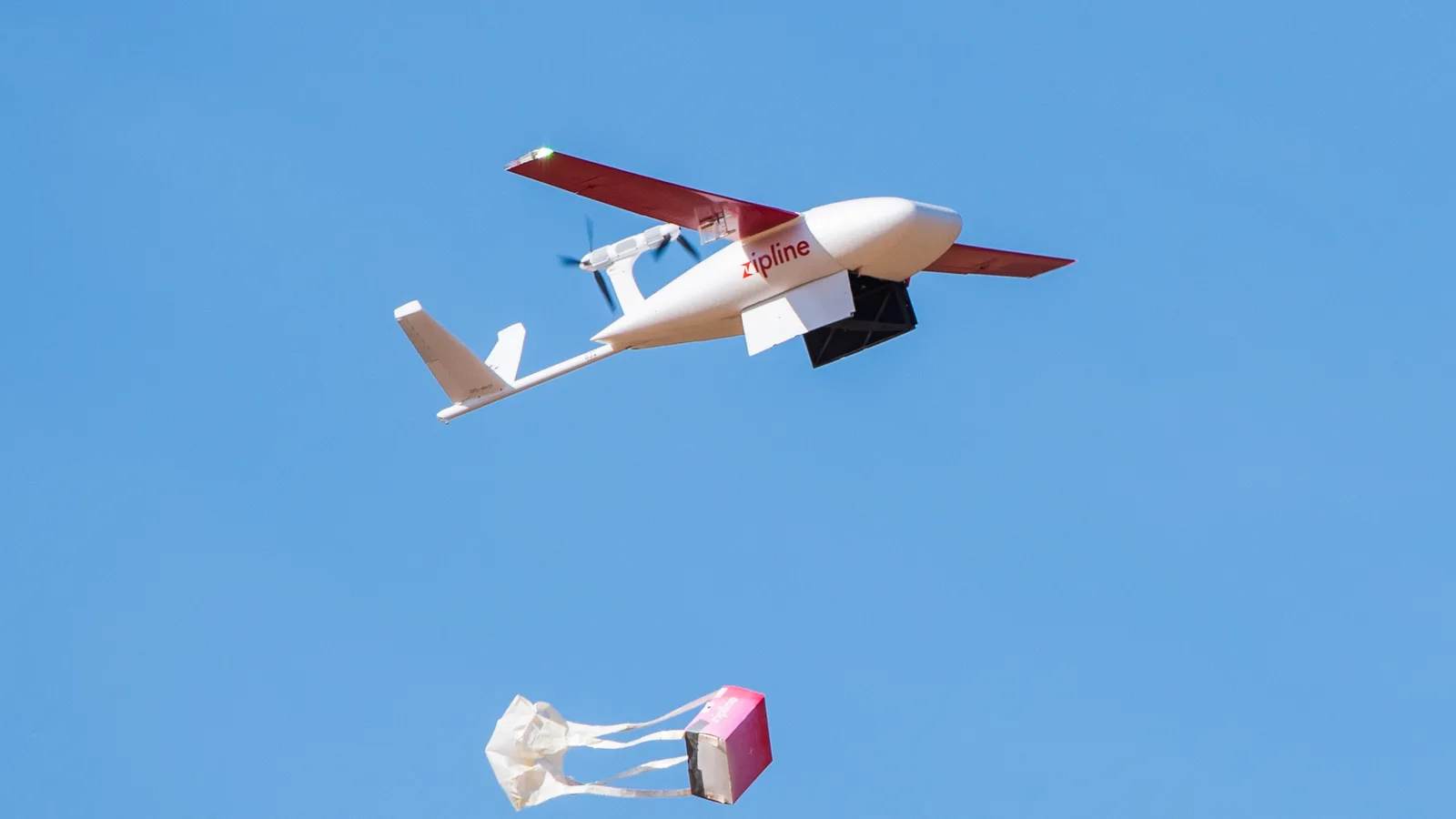
Zipline's Delivery Drones Just Landed in the Austin Area
Zipline launched drone delivery in Round Rock, Texas on Oct. 8, with orders opening Oct. 9. It is the first commercial drone delivery service in the Austin area, and the company says it will spread across the metro.
So basically: Robot drones now deliver food in the Austin area. Zipline flipped on its first Central Texas zone in Round Rock on Thursday, Oct. 8. People inside the zone could start ordering on Friday, Oct. 9. It is the first commercial drone delivery service in the Austin area.
What launched
The first zone covers homes within about three miles of 3000 E. Palm Valley Blvd. in Round Rock, just north of Austin.
If you live inside it, you download the Zipline app, make an account, and order from a restaurant or store on the app. That’s it.
Zipline says the plan is to grow from there. Its local lead, Zach Hill, told Community Impact the service area should expand to other parts of Round Rock and then the greater Austin metro.
To kick it off, Zipline did a demo delivery at Stony Point High School. It picked that school on purpose. Stony Point has a drone aviation program, and Zipline says it may work with the district on engineering, robotics, and drone classes.
How the drone actually delivers
This part is the cool part.
- You place an order in the app
- The drone flies itself to the restaurant, where a worker loads your food into a delivery pod
- The drone flies to your house on its own
- It stays more than 300 feet up and lowers the pod down on a tether
- The pod drops your order in your yard and goes back up
- The drone flies home to charge for the next run
Because it never comes down low, Zipline says it stays quiet for people on the ground. It also says the tether lets it hit a small spot even in high wind and bad weather.
The limit is about five pounds per delivery. So think a burrito and a drink, not a week of groceries.
Why Austin
Traffic. Zipline points to the TomTom Traffic Index, which found Austin commutes in 2025 took 40 percent longer than the same trips with no traffic.
A drone does not care about I-35. It also does not add another car to the road just to bring you lunch.
Williamson County Judge Steven Snell called it proof the county “has developed into an important technology center.”
Zipline is not new at this
This is not a startup testing its first drone. Zipline got its start in 2016 delivering blood and medical supplies in Rwanda.
Here are its numbers so far, from the company:
- Miles flown: more than 140 million
- Deliveries: more than 3 million
- U.S. footprint: more than 30 municipalities in four states
- Texas: already flying in the Houston and Dallas areas before Austin
So Austin is the next stop on a map that keeps filling in, not a one off experiment.
What to watch
- How fast the zone grows. Three miles is a small start. The real test is how quickly it covers the rest of Round Rock and then Austin itself.
- Which businesses join. The app is only as useful as the places you can order from.
- Weather. Central Texas gets heat, storms, and wind. Zipline says the system handles bad weather. Austin will show it.
- Neighbors. Some people love drones overhead. Some do not. How Round Rock reacts matters for the next city.
My take
I like this one a lot.
Drone delivery has been “coming soon” for about ten years. This is what it looks like when it stops being a demo. A real app, real restaurants, real backyards, and a plan to cover a whole metro.
The five pound limit is the catch. This will not replace the grocery run. But a lot of what we order is small and urgent. Lunch. A charger. Something from the pharmacy.
Taking those trips off the road with a quiet drone at 300 feet just makes sense.
And Austin is a fun place for it. That city already has robotaxis. Now the sky is getting robots too.
Would you order from a drone if it covered your street?
So basically — pass it on.